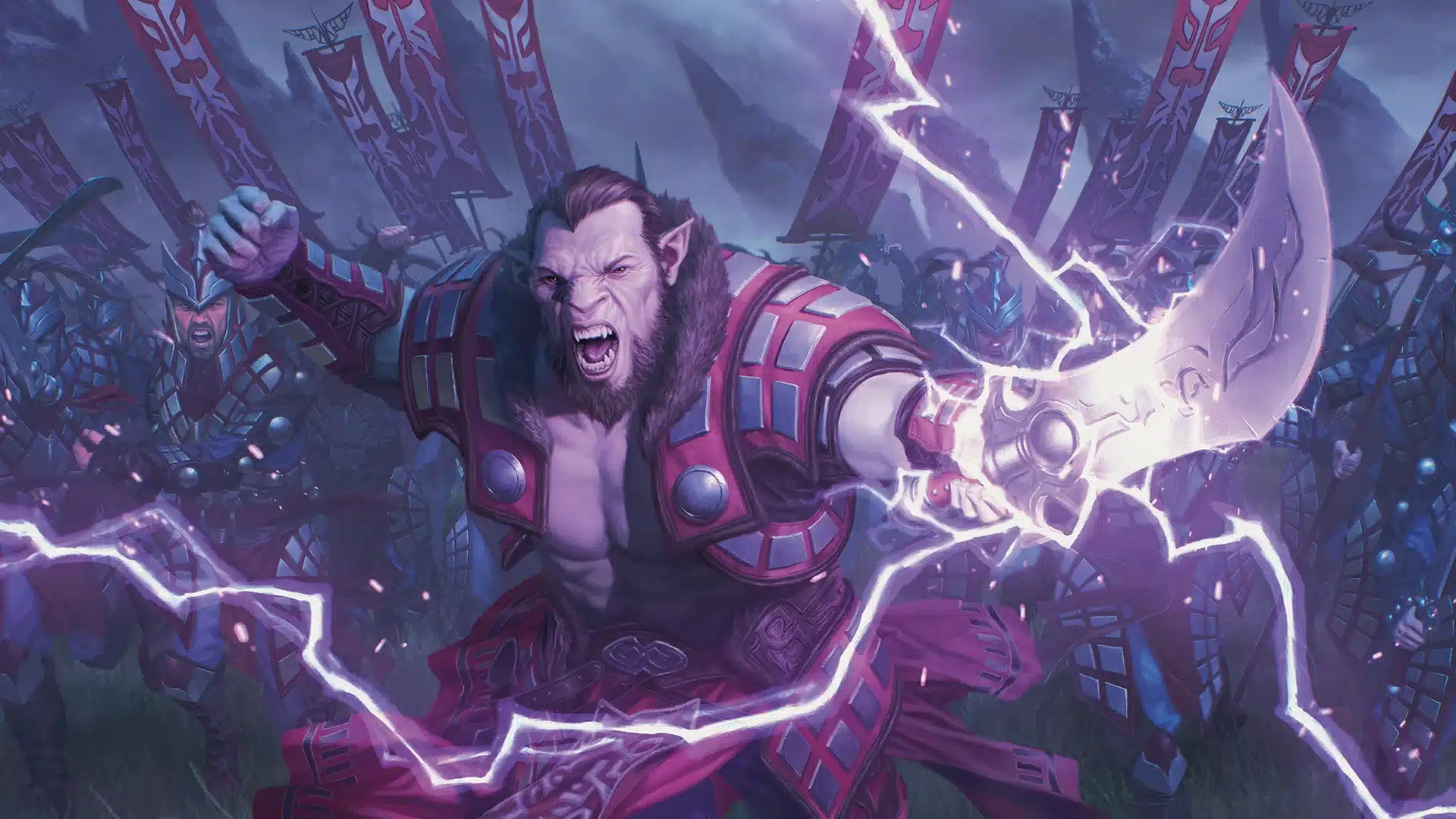
Mardu Surge arrives as an aggressive token deck led by Zurgo Stormrender, and unlike many commanders that simply reward you for creating as many creatures as possible, Zurgo cares just as much about what happens when those tokens disappear. The deck’s mobilize creatures create temporary attackers that are already scheduled to be sacrificed, turning what normally looks like a drawback into a repeatable source of cards.
Zurgo costs , has mobilize 1 and creates a tapped and attacking 1/1 red Warrior token whenever he attacks. Whenever a creature token you control leaves the battlefield, Zurgo then checks what that token was doing. If it was attacking, you draw a card. Otherwise, each opponent loses 1 life. That gives Mardu Surge two overlapping engines: temporary combat tokens replace themselves with cards, while sacrifice outlets can convert other tokens into table-wide damage.
The best Mardu Surge upgrade therefore focuses on creating tokens efficiently, attacking with temporary bodies, adding reliable sacrifice outlets and making every token matter both when it enters the battlefield and when it eventually leaves.
The Stock Deck Already Understands Zurgo’s Game Plan
Mardu Surge is unusually focused straight out of the box. Ainok Strike Leader creates additional attacking tokens whenever it or your commander attacks, Redoubled Stormsinger increases the pressure of your combat steps, and Adeline, Resplendent Cathar naturally produces more attackers while scaling with the size of your board. Hero of Bladehold, Legion Warboss and Loyal Apprentice reinforce the same philosophy by creating bodies that can immediately contribute to combat.
The precon also contains the beginnings of an Aristocrats shell. Bastion of Remembrance drains opponents whenever your creatures die, Viscera Seer gives you a free sacrifice outlet and Deadly Dispute converts an expendable creature or artifact into cards and Treasure. Yahenni, Undying Partisan provides another sacrifice outlet while becoming increasingly difficult to remove, and Eliminate the Competition can turn a large token board into a one-sided-looking creature wipe.
Skullclamp may be the most important stock card of all. Most of Zurgo’s temporary tokens are 1/1 creatures, which means equipping one with Skullclamp allows it to die naturally and draw two cards. Zurgo can add another card when an attacking token leaves, creating a remarkable amount of card advantage from a body that was going to disappear at the end of the turn anyway.
That means the core of the deck does not need to change. Mardu Surge already knows how to create bodies, attack and sacrifice them. The upgrade should make those three steps happen more efficiently and add more payoffs for doing what Zurgo already demands.
Best Mardu Surge Upgrades
Goblin Bombardment is one of the cleanest upgrades possible. It gives you a free sacrifice outlet that converts any creature into 1 damage to any target. More importantly, sacrificing a token while it is not attacking causes Zurgo’s ability to make every opponent lose another life. One expendable token can therefore deal damage through Bombardment and then generate an additional table-wide drain through the commander.
Timing creates an important choice. An attacking mobilize token sacrificed during combat was still attacking when it left the battlefield, so Zurgo draws a card instead of draining the table. Wait until another token is no longer attacking, or sacrifice a token that never attacked in the first place, and Zurgo produces the life-loss trigger instead. Goblin Bombardment lets you choose which resource matters more at the moment.
Impact Tremors attacks the opposite side of the token cycle. Instead of rewarding tokens for leaving, it deals 1 damage to each opponent whenever a creature enters under your control. Mobilize suddenly becomes damage on the way in and card advantage on the way out. Token makers such as Ainok Strike Leader, Adeline, Resplendent Cathar and Hero of Bladehold then begin pressuring life totals without requiring every small attacker to connect.
Mirkwood Bats pushes that drain plan even further. Whenever you create or sacrifice a token, each opponent loses 1 life. Zurgo already creates a token whenever he attacks, and the stock deck is full of additional token producers, so the first half triggers constantly. The second half means sacrifice outlets now produce another layer of damage before Zurgo’s own leaving-the-battlefield ability is even considered.
Anim Pakal, Thousandth Moon gives the deck another efficient source of attacking tokens. Whenever you attack with one or more non-Gnome creatures, Anim Pakal receives a +1/+1 counter and creates that many tapped and attacking Gnome artifact creature tokens. Those bodies can contribute combat damage, die naturally later or become sacrifice material for Zurgo’s other payoffs. Because the tokens enter attacking rather than being declared as attackers, they fit neatly alongside mobilize without requiring the deck to overcommit during the declare attackers step.
Caesar, Legion’s Emperor rounds out the package by turning one attacking creature into several different modes of value. His attack trigger can create additional Soldier tokens, draw cards or deal damage, and the sacrifice built into his trigger is hardly a drawback in a deck already trying to convert small creatures into resources. He is more expensive than the other additions, but the flexibility is worth the slot because every mode reinforces a plan Mardu Surge already wants.
The strongest additions therefore do not merely say “create a token.” They make both halves of a token’s life cycle valuable: entering the battlefield and leaving it again.
What Should You Cut?
The stock deck contains several expensive cards designed to create overwhelming late-game token boards, but Zurgo is most dangerous when the engine begins much earlier. Legion Loyalty has an enormous ceiling by giving your creatures myriad, yet eight mana is a huge investment in a commander that can begin generating value on turn three. When the deck is functioning correctly, you should not need an eight-mana enchantment to make combat productive.
Myr Battlesphere offers multiple bodies and a useful attack trigger, but seven mana again makes it slower than the focused engine wants. Zurgo benefits more from cheaper cards that create tokens repeatedly across several turns than from one enormous burst after most of the game has already happened.
Tempt with Vengeance can create a huge number of Elementals, but its political clause gives opponents control over part of the outcome and asks for substantial mana before becoming impressive. Token quantity matters, but reliable repeatable engines are generally stronger than one giant sorcery-speed investment.
Divine Visitation is powerful enough to deserve consideration rather than an automatic cut, but five mana for a card that does nothing until another token effect resolves can make the deck clunkier. Turning every 1/1 into a 4/4 Angel is spectacular, yet it also shifts attention away from Zurgo’s ability to profit from disposable bodies. In a streamlined Aristocrats version, the fact that a token is temporary can be an advantage rather than something we always need to upgrade into a permanent threat.
Finally, Temple of Silence is an easy first mana-base cut. Mardu Surge wants Zurgo on turn three and wants to curve directly into token producers or sacrifice engines afterward. A land that always enters tapped is serviceable in the stock list but becomes increasingly noticeable once the average mana cost begins to fall.
A clean first round of changes would therefore be:
Out: Legion Loyalty, Myr Battlesphere, Tempt with Vengeance, Divine Visitation, Temple of Silence
In: Goblin Bombardment, Impact Tremors, Mirkwood Bats, Anim Pakal, Thousandth Moon, Caesar, Legion’s Emperor
Those five swaps lower the curve and make Zurgo’s normal attack pattern substantially more punishing without abandoning the token identity of the precon.
Attacking Tokens and Other Tokens Do Different Things
Understanding Zurgo Stormrender correctly changes how you play almost every sacrifice outlet in the deck. Whenever one of your creature tokens leaves the battlefield, Zurgo checks whether that token was attacking immediately before it left. If it was, you draw a card. If it was not, each opponent loses 1 life.
Mobilize naturally creates the first category. Zurgo attacks, creates a tapped and attacking Warrior, and that Warrior is sacrificed at the beginning of the next end step. When it leaves this way, it was an attacking creature, so Zurgo replaces it with a card. That makes the apparent temporary nature of mobilize much less painful because the token already attacked and then replenishes your hand.
But token makers such as Ophiomancer, Chittering Witch or Thalisse, Reverent Medium can produce creatures that never entered combat. Sacrificing those tokens through Viscera Seer or Goblin Bombardment produces Zurgo’s other reward and drains every opponent.
This gives Mardu Surge a much more interesting resource system than simply “sacrifice all your tokens.” Sometimes the correct play is to leave a mobilize token alone and take the card when it disappears naturally. Other times you need to sacrifice a token earlier for an immediate effect. The commander rewards both approaches, but with different currencies.
Mobilize Tokens Do Not Trigger Every Attack Ability
Mobilize has another subtle rules interaction worth remembering. The Warrior tokens it creates enter the battlefield already tapped and attacking. They were never declared as attackers, which means abilities that trigger whenever a creature attacks do not trigger for those tokens.
That distinction matters with cards such as Hero of Bladehold and other attack-trigger payoffs. The creature carrying mobilize was declared as an attacker and triggers normally, but the Warrior token that appears afterward does not create a second wave of ordinary attack triggers simply because it joined combat.
The tokens still count as attacking creatures for effects that check the number of attacking creatures after they exist. That makes cards with wording that checks your current attackers especially useful, because mobilize increases that count before some other triggered abilities resolve.
The important lesson is not to evaluate every “attack matters” card as though mobilize doubles it. Zurgo prefers cards that either create more attacking bodies directly or reward the fact that a wide attacking board already exists.
Temporary Tokens Are a Feature, Not a Problem
One of the easiest mistakes when upgrading Mardu Surge is trying to prevent every mobilize token from being sacrificed. Zurgo, Thunder’s Decree, the alternate Zurgo from Tarkir: Dragonstorm, can stop Warrior tokens from being sacrificed during your end step, and there are situations where keeping an army permanently is useful. But Zurgo Stormrender was specifically designed to make the disappearance of those tokens profitable.
If a mobilize Warrior attacks and then leaves at the beginning of the end step, you already received a combat body for no additional mana and then replaced it with a card. Add Bastion of Remembrance, Mirkwood Bats or other death and sacrifice payoffs, and that temporary Warrior may produce value at several different stages.
This is also why I would not build the entire upgraded deck around Divine Visitation. A 4/4 Angel is obviously stronger in combat than a 1/1 Warrior, but Zurgo does not require every token to survive and become a serious creature. Sometimes the best token is one that arrives, attacks, creates an enter-the-battlefield trigger and then disappears into several more resources.
The deck becomes much smoother once you stop treating sacrifice as a failure state.
Sacrifice Outlets Let You Choose Between Cards and Damage
Viscera Seer is already one of the strongest support cards in the precon because it costs only one mana and sacrifices creatures for free. Goblin Bombardment gives the deck another free outlet, and having several is important because they allow you to control exactly when tokens leave.
A token sacrificed while attacking causes Zurgo to draw a card. That can be extremely useful if combat has gone badly and a token is going to be blocked anyway. Sacrifice it before combat ends, receive the outlet’s effect and still turn the departing attacker into a fresh card.
A token that is no longer attacking instead drains each opponent. This becomes particularly dangerous when you have a pile of tokens created outside combat. Ten expendable creature tokens plus a free sacrifice outlet can translate directly into ten Zurgo triggers, causing each opponent to lose 10 life before considering Bastion of Remembrance, Mirkwood Bats or the sacrifice outlet itself.
That gives the deck a real noncombat finishing plan. Your token army does not always need to survive blockers and connect with opponents. If enough bodies accumulate, they can simply be converted into life loss.
Token Multipliers Are Strong, but Payoffs Come First
Cards such as Anointed Procession are naturally attractive in Zurgo because doubling token creation means more attackers, more eventual leave-the-battlefield triggers and more material for sacrifice outlets. Current Zurgo lists regularly experiment with these effects, and the synergy is real.
I would still prioritize payoffs before adding several token doublers. A card such as Impact Tremors does something immediately whenever the deck performs its normal game plan, while a token doubler needs another card before it accomplishes anything. Mirkwood Bats similarly rewards both creation and sacrifice, making it useful at multiple stages of the turn.
Once the core engine is reliable, Anointed Procession, Mondrak, Glory Dominus or similar effects become excellent second-wave upgrades. Doubling Ainok Strike Leader or Zurgo’s own mobilize tokens can rapidly overwhelm a table, especially when each extra body also represents another future card or drain trigger.
The order matters. First make every token valuable. Then make twice as many of them.
Skullclamp Is One of the Best Cards in the Entire Deck
Skullclamp deserves to stay regardless of how aggressively you rebuild Mardu Surge. Zurgo naturally creates 1/1 creature tokens, and Skullclamp gives an equipped creature +1/-1. A 1/1 Warrior therefore dies as soon as Skullclamp becomes attached, immediately drawing two cards.
With Zurgo on the battlefield, that departure creates another trigger. If the token was not attacking, each opponent also loses 1 life. If you equipped a token that was somehow still considered attacking before it left, Zurgo instead draws another card. Either route turns one disposable body into far more resources than its original 1/1 stat line suggests.
The stock deck also contains plenty of creatures produced outside mobilize. Ophiomancer, Chittering Witch, Siege-Gang Commander and Thalisse, Reverent Medium all provide bodies that can eventually wear Skullclamp when their combat utility is finished.
This is another reason not to concentrate entirely on making every token large. Skullclamp actively prefers the smallest creatures available.
The Mana Base Mostly Needs Faster Early Turns
Mardu Surge has a solid three-color foundation in the stock deck. Command Tower, Battlefield Forge, Caves of Koilos, Clifftop Retreat, Dragonskull Summit, Fetid Heath, Isolated Chapel, Shattered Sanctum, Smoldering Marsh and Exotic Orchard already provide a reasonable collection of fixing.
The ramp package is similarly functional. Sol Ring, Arcane Signet, Fellwar Stone, Talisman of Conviction, Talisman of Hierarchy and Wayfarer’s Bauble give the deck enough acceleration without devoting too many slots to mana production.
The main weakness is simply that several lands enter tapped. Temple of Silence, Temple of Triumph, Nomad Outpost, Path of Ancestry, Terramorphic Expanse and Shattered Landscape are all reasonable budget fixing, but Zurgo costs only three mana and wants to begin attacking quickly. A tapped land on exactly the wrong turn can delay the entire token engine.
I would improve the mana base gradually rather than replacing everything at once. Start with the slowest lands that provide the least additional value and move toward untapped Mardu sources according to budget.
Our Mana Base Upgrade Guide is useful here because Mardu Surge does not need an expensive mana base to succeed. It needs reliable access to early enough that Zurgo can attack before opponents have established defenses that make small-token combat irrelevant.
How the Upgraded Mardu Surge Deck Wins
The ideal opening establishes mana, a token payoff and one or two creatures capable of widening combat. Impact Tremors, Bastion of Remembrance or Skullclamp can all come down before the board becomes crowded, while Ainok Strike Leader and Anim Pakal, Thousandth Moon prepare additional attacking bodies.
Once Zurgo Stormrender enters, attacking becomes a source of resources rather than merely damage. Zurgo’s mobilize token joins combat, Strike Leader can create additional attackers for each opponent and cards such as Adeline, Resplendent Cathar or Hero of Bladehold add even more pressure. Impact Tremors can damage the table as those creatures arrive before combat damage is even considered.
At the end of the turn, the temporary mobilize bodies begin disappearing. Zurgo turns attacking tokens leaving into cards, while death payoffs such as Bastion of Remembrance continue draining opponents. The deck can then untap with a replenished hand rather than suffering the normal problem of token aggro decks running out of resources.
As the game progresses, free sacrifice outlets create the second route to victory. Goblin Bombardment and Viscera Seer can convert nonattacking tokens into Zurgo drain triggers, while Mirkwood Bats punishes both the creation and sacrifice of those same bodies. Caesar, Legion’s Emperor adds another layer of tokens, cards and damage without requiring the deck to abandon combat.
That gives Mardu Surge a much stronger late game than its army of 1/1 tokens initially suggests. Early creatures attack and generate cards. Midgame token payoffs chip away at every opponent. Eventually sacrifice outlets allow the entire board to become direct damage, meaning opponents cannot simply stabilize behind larger blockers and assume the threat is over.
PreconForge Verdict
Mardu Surge already gives Zurgo Stormrender an excellent foundation. Ainok Strike Leader, Redoubled Stormsinger, Adeline, Resplendent Cathar, Hero of Bladehold, Grand Crescendo, Skullclamp, Bastion of Remembrance, Viscera Seer and Deadly Dispute mean the deck already contains both halves of its token-and-sacrifice engine.
The biggest mistake would be assuming those temporary mobilize tokens need to be saved. Zurgo was designed to profit when they disappear. Impact Tremors makes them hurt opponents on the way in, Mirkwood Bats punishes both their creation and sacrifice, Goblin Bombardment lets you decide exactly when creatures should leave and Anim Pakal, Thousandth Moon creates even more attacking bodies. Caesar, Legion’s Emperor then gives the deck another flexible payoff for committing creatures to combat.
That leaves Zurgo with a remarkably efficient loop: create tokens, attack with them, extract whatever combat value is available and then get paid again when those tokens leave.
Once Mardu Surge starts treating every temporary Warrior as a resource rather than a creature that needs to survive, the deck becomes much harder to exhaust. Blocking the army does not stop the card draw, destroying the tokens can trigger additional payoffs and a pile of creatures that never connects in combat can eventually become lethal through sacrifice outlets alone.


