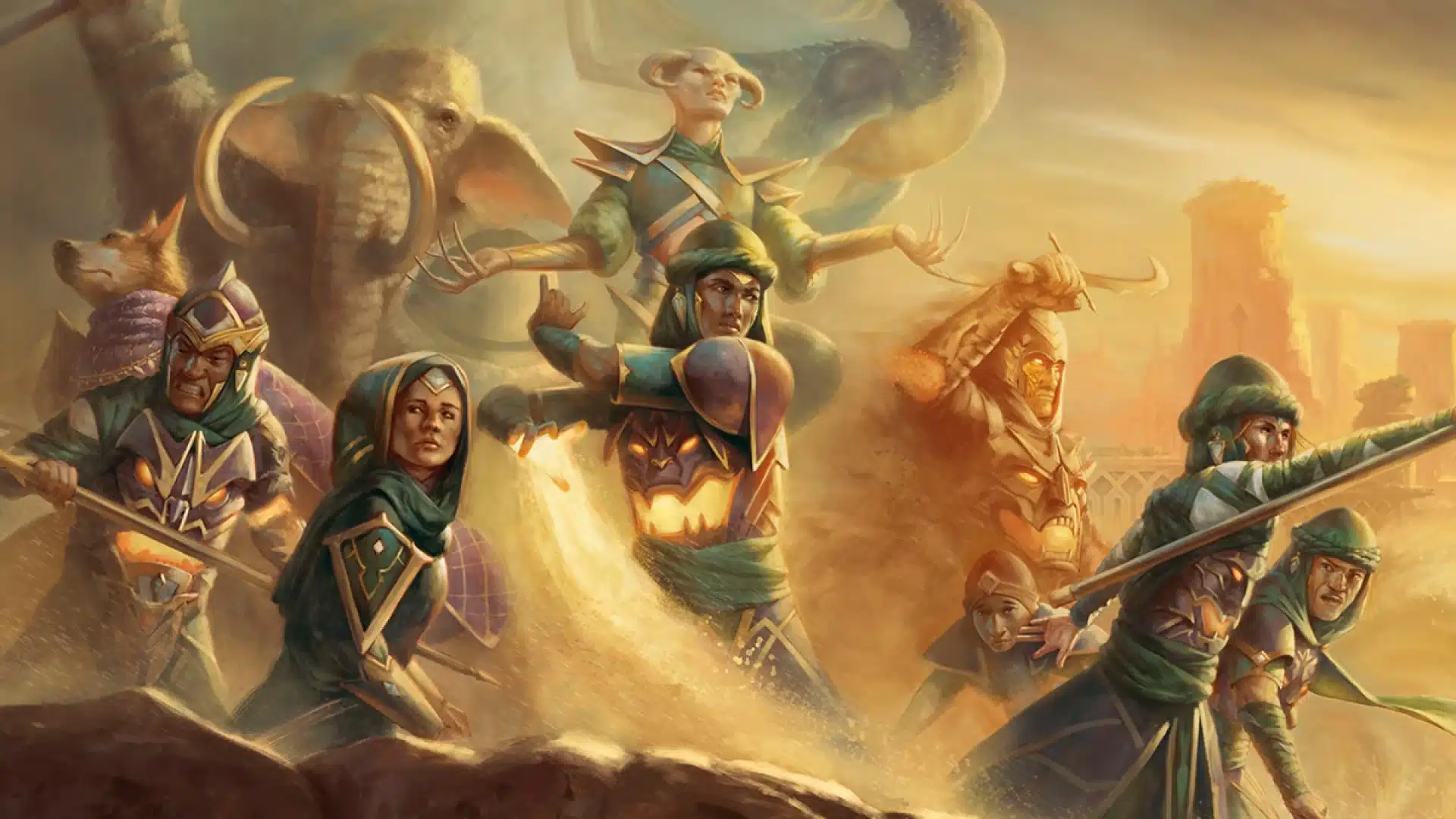
Abzan Armor looks like a defensive Wall deck, but Felothar the Steadfast changes what all of that toughness actually means. Instead of sitting behind a fortress and waiting for opponents to attack, Felothar turns every high-toughness creature into an offensive threat and allows your Defenders to march directly into combat.
Felothar costs and begins as a 0/5. Each creature you control assigns combat damage equal to its toughness rather than its power, and creatures you control can attack as though they did not have defender. He also gives you a powerful sacrifice outlet for and : sacrifice another creature, draw cards equal to that creature’s toughness, then discard cards equal to its power.
That completely changes how the deck should be evaluated. A cheap 0/4 Wall is not merely a blocker anymore. With Felothar on the battlefield, it attacks as a four-damage creature while still being perfectly suited to protect you when necessary. The best Abzan Armor upgrade therefore focuses on cheap creatures with enormous toughness, additional toughness-matters payoffs and enough protection and card advantage to keep Felothar’s fortress moving forward.
The Stock Deck Is Already an Excellent Felothar Shell
Abzan Armor contains an unusually high number of creatures that become dramatically better once Felothar is in play. Wall of Omens and Wall of Blossoms cost only two mana, replace themselves with a card and become four-damage attackers. Carven Caryatid follows the same pattern with 5 toughness, while Sylvan Caryatid combines fixing, hexproof and a surprisingly relevant three points of combat damage.
The mana creatures are particularly important. Overgrown Battlement and Axebane Guardian use your Defenders to generate increasingly large amounts of mana, which means the same creatures responsible for developing your board eventually become legitimate attackers. Wall of Roots provides another inexpensive source of acceleration while giving the deck plenty of toughness for only two mana.
Several stock payoffs reinforce that plan. Assault Formation gives the deck redundancy by allowing creatures to assign combat damage according to toughness even when Felothar is unavailable, while Walking Bulwark can let Defenders attack and give another creature haste. Baldin, Century Herdmaster rewards the deck for filling the battlefield with creatures whose toughness exceeds their power, and Tower Defense can turn one unassuming attack into a huge burst of damage.
The stock deck therefore does not need to become more defensive. It already has enough walls. The real upgrade is making sure those walls consistently transition from early-game infrastructure into late-game pressure.
Best Abzan Armor Upgrades
Doran, Besieged by Time is one of the strongest modern additions to the strategy. Creature spells you cast with toughness greater than their power cost less, which applies to a large percentage of the deck. Even better, whenever one of your creatures attacks or blocks, it gets +X/+X until end of turn, where X is the difference between its power and toughness.
That is particularly dangerous with creatures that begin at zero power. A 0/5 creature receives +5/+5 when it attacks or blocks, becoming a 5/10 for the turn. Felothar then has it assign combat damage according to its new 10 toughness. Doran therefore provides cost reduction early and turns the deck’s natural stat imbalance into an enormous combat boost later.
Tree of Perdition approaches toughness from a completely different angle. A 0/13 body becomes a thirteen-damage attacker with Felothar, which is already excellent for four mana. Its activated ability can also exchange an opponent’s life total with Tree of Perdition’s toughness, giving the deck another way to pressure players whose life totals have moved beyond what ordinary combat can comfortably handle.
Crystal Barricade is much less flashy but extremely efficient. For only , you get a 0/4 Wall that gives you hexproof and prevents all noncombat damage that would be dealt to your other creatures. Felothar turns that defensive utility creature into a four-damage attacker while Crystal Barricade simultaneously protects the rest of your fortress from many damage-based sweepers and targeted effects aimed at you.
Brave the Sands gives the entire strategy something it desperately wants once it begins attacking: vigilance. Creatures you control can also block an additional creature each combat, allowing your high-toughness army to pressure opponents without abandoning the defensive advantage that made the board difficult to attack in the first place. Felothar wants to turn walls sideways, and Brave the Sands makes that decision much less dangerous.
Finally, Betor, Kin to All gives the deck a powerful reward simply for accumulating toughness. At your end step, reaching 10 total toughness draws a card, 20 allows you to untap your creatures and 40 makes each opponent lose half their life, rounded up. Abzan Armor can cross the first threshold almost accidentally, and a developed board of Walls can reach 20 or 40 toughness much faster than a normal creature deck.
The best upgrades therefore do not need to invent a new strategy. They simply make toughness perform more jobs at the same time: mana, combat damage, protection and eventually a win condition.
What Should You Cut?
The stock deck contains several cards that are individually powerful but belong to a slower and more generic Abzan game plan. Zetalpa, Primal Dawn is the clearest example. An 8/8 with a huge collection of keywords is difficult to argue with once it reaches the battlefield, but eight mana is a massive investment when Felothar can turn a two-mana 0/4 Wall into four points of damage.
Shadrix Silverquill is another useful multiplayer card whose abilities are not particularly connected to the toughness engine. Five mana for a flying political threat is less appealing once that slot can become another creature that improves Defender density or multiplies the effectiveness of your existing board.
Indulging Patrician asks the deck to gain at least 3 life during the turn before its end-step drain becomes active. Abzan Armor certainly contains incidental life gain through cards such as Nyx-Fleece Ram, Wall of Reverence and Ikra Shidiqi, the Usurper, but life gain is a supporting theme rather than the reason to play Felothar.
Staff of Compleation provides several useful modes, yet three mana followed by repeated life payments is slower than the focused deck needs. Felothar himself already provides a strong card-selection engine, and green gives the deck excellent access to mana through its Defender package.
I would also begin trimming the always-tapped portion of the mana base with Temple of Silence. Abzan Armor wants to spend its first turns deploying Walls and mana creatures before casting Felothar, so losing an early mana to a tapped land can interrupt a surprisingly important curve.
A clean first round of changes would therefore be:
Out: Zetalpa, Primal Dawn, Shadrix Silverquill, Indulging Patrician, Staff of Compleation, Temple of Silence
In: Doran, Besieged by Time, Tree of Perdition, Crystal Barricade, Brave the Sands, Betor, Kin to All
Those changes lower the curve, improve the toughness engine and give the deck more ways to win without abandoning the Walls and Defenders that make Abzan Armor distinctive.
Felothar Already Does What Assault Formation Is Trying to Do
One of the most important things to understand about Felothar the Steadfast is that he does not increase your creatures‘ power. Instead, he changes how much combat damage they assign.
A Wall of Omens remains a 0/4 creature. Effects that look at its power still see zero, while effects that look at toughness see four. During combat, Felothar simply allows it to assign 4 damage instead of zero.
That distinction matters with several cards in the deck. A creature can remain eligible for effects that reward low power while simultaneously attacking for substantial damage. It also means temporary toughness increases become offensive combat tricks even when they do not increase power.
Tower Defense demonstrates this perfectly. Giving your creatures +0/+5 until end of turn normally looks like an emergency defensive spell. With Felothar, that extra five toughness becomes five additional combat damage from every creature affected. A battlefield containing four modest Walls can suddenly represent twenty additional damage for only two mana.
Assault Formation should therefore stay even though its primary ability overlaps with the commander. Redundancy matters. If opponents repeatedly remove Felothar, the deck still needs a way for its collection of 0-power Defenders to threaten the table rather than becoming a fortress with no way to finish the game.
Defender Is No Longer a Drawback
Felothar’s second static ability is just as important as the toughness-damage effect: creatures you control can attack as though they did not have defender. That means the deck does not need to be overly selective about playing actual Walls and Defenders.
Cards such as Wall of Omens, Wall of Blossoms and Carven Caryatid are normally balanced around the fact that their efficient bodies cannot attack. Felothar removes that restriction while keeping all of the benefits that came with the low mana cost.
This also makes Overgrown Battlement and Axebane Guardian much more interesting. During the early game they are mana engines. Once enough lands are available, they no longer need to spend every turn tapping for mana and can instead join combat as meaningful threats.
Crashing Drawbridge works in the opposite direction. Its own Defender keyword stops mattering under Felothar, and its ability can give the rest of your creatures haste. A late-game Wall or toughness payoff no longer needs to wait an entire turn before contributing to combat.
This is why Defender density still matters even though Felothar technically works with every creature. The strongest cards in the deck are often deliberately undercosted because their inability to attack was supposed to balance them.
Felothar simply removes the part that made them fair.
Felothar’s Sacrifice Ability Is a Real Card-Advantage Engine
The final line on Felothar deserves much more attention than the original version of this guide gave it. For , tapping Felothar and sacrificing another creature, you draw cards equal to the sacrificed creature’s toughness and then discard cards equal to its power.
In a normal creature deck those two numbers might be relatively similar. In Abzan Armor, they can be completely different.
Sacrificing a 0/4 Wall of Omens means drawing four cards and discarding zero. A 0/5 creature becomes five new cards. The extreme example is Tree of Redemption, whose printed 0/13 body can potentially become an enormous burst of card advantage if you no longer need it on the battlefield.
This makes zero-power creatures especially valuable. They are good attackers because Felothar uses their toughness, and when they stop being useful in combat they can be converted into a large number of cards without forcing you to discard anything afterward.
The ability also gives the deck protection against removal in an indirect way. If an opponent is already going to destroy one of your large-toughness creatures, sacrificing it to Felothar can turn that doomed permanent into several fresh cards. You will not always have three mana and an untapped commander available, but the possibility makes targeted removal much less efficient.
Felothar therefore does not merely convert toughness into damage.
He converts toughness into cards too.
Doran, Besieged by Time Changes the Combat Math Again
Doran, Besieged by Time deserves special attention because he does something subtly different from Felothar. He does not simply let creatures deal damage according to toughness. Instead, whenever one of your creatures attacks or blocks, Doran gives it +X/+X until end of turn, where X is the difference between its power and toughness.
Consider a 0/5 Wall. When it attacks, Doran sees a difference of five and gives it +5/+5, temporarily making it a 5/10. Felothar then tells that creature to assign combat damage according to its toughness, so the Wall can deal 10 damage rather than the five you might initially expect.
The interaction becomes even more threatening across a battlefield filled with 0/4 and 0/5 creatures. Doran effectively doubles the offensive impact of their natural stat imbalance while his first ability makes many of those same creature spells cheaper to cast.
Importantly, Doran does not replace Assault Formation as another simple toughness-damage effect. He approaches the problem from a different angle, which means having both Doran and Felothar on the battlefield creates much more than redundant text.
This is exactly the kind of upgrade Abzan Armor wants: a card that is useful when Felothar is absent but becomes dramatically stronger when the commander is present.
The Deck Can Attack Without Giving Up Its Fortress
Turning Walls into attackers creates an obvious problem. Once everything attacks, the battlefield that discouraged opponents from hitting you suddenly disappears as a defensive resource.
Brave the Sands is one of the cleanest solutions because vigilance lets your creatures attack without tapping. The additional ability allowing each creature to block an extra creature also makes a battlefield of high-toughness defenders extremely difficult to penetrate.
The stock Seedborn Muse provides another route. Untapping all of your permanents during every other player’s untap step means you can attack during your turn, then have the entire defensive structure available again before the next opponent begins combat. The extra untaps are especially valuable with Axebane Guardian, Overgrown Battlement and Felothar’s activated ability.
Behind the Scenes also deserves to remain in the deck. Because many creatures have extremely low printed power, skulk can make them difficult to block even though Felothar allows those same creatures to deal damage based on much larger toughness values.
That interaction captures one of the strangest strengths of the deck. Your creatures can look tiny according to their printed power, slip around blockers that are not allowed to block them and then assign four, five or substantially more damage when combat actually happens.
The walls do not have to stop being a fortress just because they learned how to attack.
Betor Gives Toughness Another Way to Win
Betor, Kin to All is an especially natural addition because the card measures something Abzan Armor already accumulates without trying: total toughness.
At the beginning of your end step, if creatures you control have total toughness 10 or greater, you draw a card. If that total is 20 or greater, you then untap every creature you control. If it reaches 40 or greater, each opponent loses half their life, rounded up.
Those numbers sound high until you look at the creatures the deck actually plays. Tree of Redemption contributes 13 toughness by itself. A couple of four- and five-toughness Walls can cross twenty without requiring a particularly large battlefield, and a developed Defender board can legitimately approach forty.
The 20-toughness threshold also solves the same offensive problem as vigilance. Attack with the fortress, reach your end step and let Betor untap the team before opponents receive their turns.
At 40 toughness, Betor provides an entirely different route through stalled boards. Opponents do not need to cooperate with combat at all; their life totals can simply be cut in half before the next attack.
That makes Betor a payoff for something the deck was already doing rather than another package you need to build around separately.
Board Wipes Can Be Built in Your Favor
A creature-heavy deck inevitably needs to think about sweepers, but Abzan Armor has an unusual advantage: many of its creatures have almost no power.
Slaughter the Strong is already excellent in the stock deck because each player chooses creatures with total power 4 or less and sacrifices the rest. A board containing several 0-power Walls can survive almost completely while opponents are forced to reduce conventional armies dramatically.
Expel the Interlopers gives the deck another flexible sweeper by allowing you to choose a power threshold. Again, the natural separation between low power and high toughness means your battlefield can survive effects that destroy much more traditionally threatening creatures.
This is another reason not to fill the upgraded deck with generic Abzan bombs. A creature such as Zetalpa, Primal Dawn may be extremely powerful in isolation, but its high printed power stops interacting favorably with the asymmetric sweeper plan.
A 0/6 Wall can attack for six with Felothar and still survive effects designed to punish high-power boards.
That statistical mismatch is one of the deck’s greatest advantages, and the upgrade should preserve it.
The Mana Base Mostly Needs Better Early Sequencing
Abzan Armor already contains a workable three-color foundation. Command Tower, Canopy Vista, Exotic Orchard, Fortified Village, Isolated Chapel, Overgrown Farmland, Sunpetal Grove, Twilight Mire and Woodland Cemetery give the deck plenty of usable Abzan fixing.
The creature package provides more acceleration than the mana rocks alone suggest. Overgrown Battlement, Axebane Guardian, Sylvan Caryatid, Wall of Roots and Faeburrow Elder all contribute mana while still benefiting from Felothar’s toughness engine. Sol Ring, Arcane Signet, Orzhov Signet and Selesnya Signet provide additional acceleration.
The weakest part of the mana base is simply the collection of lands that always enter tapped. Temple of Malady, Temple of Plenty, Temple of Silence, Sandsteppe Citadel, Radiant Grove and Path of Ancestry are all usable budget options, but several appearing together can make the early turns unnecessarily slow.
Felothar costs , so reliable access to all three colors on turn four matters more than squeezing a little utility from every land. I would replace the slowest lands gradually with untapped Abzan fixing according to budget rather than rebuilding the entire mana base at once.
Our Mana Base Upgrade Guide is useful here because Abzan Armor has an additional advantage many decks do not: several of its best Walls are also mana sources. Improving the lands therefore makes an already strong acceleration package even smoother.
How the Upgraded Abzan Armor Deck Wins
The ideal opening looks deceptively harmless. Cast Wall of Roots, Wall of Omens, Wall of Blossoms, Overgrown Battlement or Sylvan Caryatid, developing mana and cards while giving opponents very little incentive to attack into your battlefield.
Once Felothar the Steadfast arrives, those creatures immediately change roles. A 0/4 is suddenly a four-damage attacker, a 0/5 becomes five damage and creatures with defender can participate normally in combat. Assault Formation provides redundancy if Felothar disappears, while Behind the Scenes can make the team’s low printed power surprisingly difficult to block.
The next layer multiplies that pressure. Doran, Besieged by Time turns the difference between power and toughness into temporary +X/+X, Brave the Sands lets the army attack while remaining available to block and Tower Defense can transform an apparently ordinary combat step into a lethal one.
If opponents successfully stabilize against combat, the deck still has alternatives. Betor, Kin to All converts your total toughness into cards, untaps and eventually massive life loss. Felothar can sacrifice a high-toughness creature to refill your hand, while Tree of Perdition gives you another unusual way to attack a player’s life total.
That creates the progression Abzan Armor was always trying to achieve. Early Walls discourage combat and produce resources. Felothar converts those Walls into attackers. Toughness payoffs multiply their damage, and the same enormous toughness that makes the creatures difficult to kill eventually becomes cards, mana and alternate ways to finish the table.
PreconForge Verdict
Abzan Armor already contains almost everything Felothar the Steadfast needs to function. Wall of Omens, Wall of Blossoms, Overgrown Battlement, Axebane Guardian, Sylvan Caryatid, Tree of Redemption, Assault Formation, Walking Bulwark, Behind the Scenes and Tower Defense mean the Defender foundation is already remarkably complete.
The biggest mistake would be treating that battlefield as something designed only to block.
Felothar does the opposite. He removes defender as an offensive restriction, converts toughness directly into combat damage and eventually turns high-toughness creatures into enormous bursts of card advantage.
Doran, Besieged by Time makes the natural power-toughness imbalance even more explosive. Tree of Perdition provides thirteen toughness for only four mana, Crystal Barricade protects the fortress while becoming another efficient attacker, Brave the Sands lets the entire board attack without leaving you defenseless and Betor, Kin to All turns the deck’s total toughness into an additional win condition.
Most importantly, stop thinking of a 0/5 as a creature with zero power.
In Felothar’s army, zero power is often exactly what makes the creature broken.
You get the low mana cost and defensive efficiency that were supposed to compensate for a creature’s inability to attack effectively, then Felothar removes both drawbacks at once. The result is an Abzan deck that spends the first few turns looking like a fortress and the rest of the game proving that the fortress can move.


