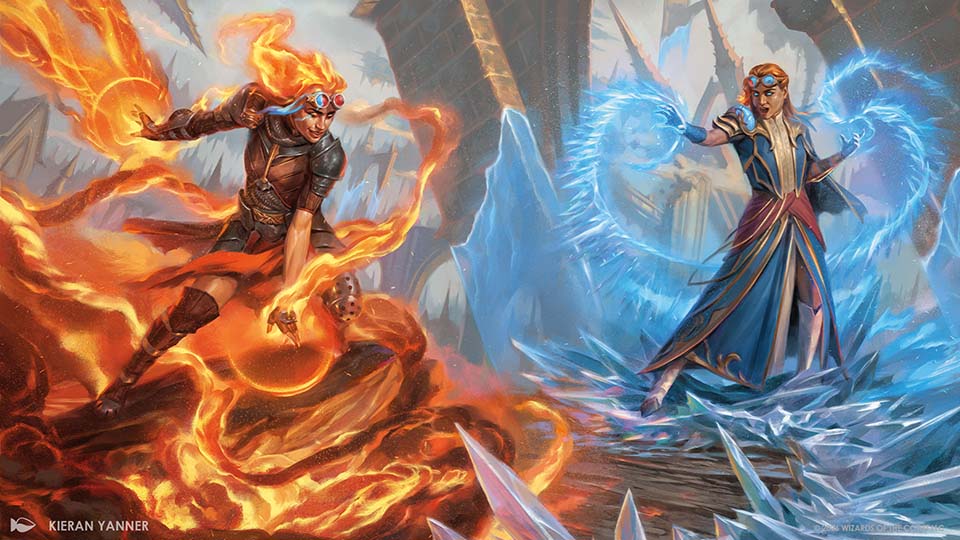
Reality Fracture may be built around alternate versions of familiar Magic characters, but your Prerelease will still be won by the same things that decide most Limited formats: curve, removal, card advantage and knowing what your colors are actually trying to do.
Prerelease events begin September 25, 2026, followed by the full tabletop release on October 2. Reality Fracture supports all ten two-color combinations, with the five allied pairs representing Hexhaven’s colleges and the five enemy pairs built around major characters from the set.
This guide covers all ten Reality Fracture Draft archetypes, the commons and uncommons worth watching most closely, and the decisions that matter when turning six Play Boosters into a functional Sealed deck.
If Draft and Sealed are new to you, our MTG Formats Explained guide breaks down how Limited differs from Commander, Standard and other Magic formats.
Reality Fracture Limited at a Glance
The first thing to know is that Reality Fracture appears relatively interactive.
There is a healthy amount of removal across the colors, creatures generally sit within familiar modern Limited stat ranges, and the format contains enough inexpensive spells that simply filling your deck with expensive Echoverse haymakers is unlikely to work.
That makes your early curve particularly important.
For Sealed, a good starting point remains roughly 17 lands in a 40-card deck, enough two- and three-mana plays to avoid falling behind, several pieces of interaction and only as many expensive finishers as your deck can realistically support.
Reality Fracture also contains significant mana fixing, including a cycle of common dual lands and large commons with basic landcycling. Splashing a particularly powerful card can therefore be realistic, but that does not mean every Sealed pool should become four-color soup.
Start with your best two colors.
Splash only when the payoff is worth making your mana worse.
White-Blue: Fatehold Surveil Aggro
White-blue is not the traditional slow Azorius control deck. Fatehold wants to use scry and surveil to improve card quality while turning that manipulation into battlefield pressure.
Fatehold Chronologist and Prudent Fateseer are important signposts, while cards such as Your Fate Ends Here and Semester Foreseer help manipulate the top of your library.
The key is not to overload on cards that merely scry without affecting the battlefield. White-blue still needs creatures and tempo. Effects such as Desperate Futurescribe become much better when the rest of the deck is already doing useful things while setting them up.
Draft priority: efficient creatures first, then scry/surveil payoffs.
Blue-Black: Theorix Graveyard Math
Dimir has one of the clearest archetype requirements in the set: get seven or more cards into your graveyard.
Theorix Metamage helps fill the graveyard, while Void Extrapolator becomes stronger once you reach the threshold. Cheap spells and self-mill therefore serve two purposes: they interact with the game while moving you toward the seven-card breakpoint.
The danger is drafting too many payoffs and not enough enablers.
A card that becomes excellent with seven cards in the graveyard is not excellent if your deck reaches seven on turn nine.
Prioritize cheap cards that naturally stock the graveyard, then take the more demanding rewards once you know the engine is reliable.
Black-Red: Stingerquill Face Burn
Black-red may be the most straightforwardly aggressive pair in Reality Fracture.
The archetype rewards dealing noncombat damage, which means your removal and burn spells can also function as synergy pieces. Stingerquill Voxmancer and Whiplash Wordsmith point you in that direction, while Essence Burn and Fulminous Forte contribute interaction.
This is exactly the kind of deck where removal becomes even more valuable than normal.
A spell that kills a blocker while also enabling another Stingerquill payoff is doing two jobs at once.
Do not assume that “burn deck” means filling the list with cards that only damage the opponent. You still need creatures and ways to control the battlefield.
Red-Green: Konstrari Mana Ramp
Gruul is the big-mana archetype.
Konstrari Improviser and Woodwork Prodigy help generate Heartwood tokens and accelerate you toward the top of your curve. Cards such as Archive Arbiter and Vinelasher Adept give that extra mana somewhere productive to go.
This is one of the rare Reality Fracture decks where I am comfortable allowing the curve to run slightly higher.
But ramp does not excuse doing nothing.
If your deck contains several six- and seven-mana threats but only one card capable of accelerating into them, you are not a ramp deck. You are simply a slow deck.
Draft the mana first. Draft the expensive payoff second.
Green-White: Vigorbloom Life Gain
Green-white turns gaining life into permanent battlefield growth.
Vigorbloom Vanguard combines life gain with +1/+1 counters, while Emergency Phytomedic helps establish the archetype’s engine. Bloombrute can reward repeated life gain with additional resources.
As usual with lifegain strategies, the enabler-payoff balance is critical.
A card that gains 3 life and does almost nothing else is not suddenly good because your deck contains one lifegain payoff. The strongest versions will use creatures and spells that are already playable while incidentally gaining life.
Then the payoff cards turn those ordinary plays into something much stronger.
White-Black: Liliana’s Attrition
Orzhov wants small creatures to provide value on the way in and even more value when they die.
Twisted Fates is one of the central signposts, while cards such as Rank Rat and Campus Crier give you creatures you are comfortable trading away.
Edgar, Ancient Bloodlord pushes the sacrifice and attrition plan even further.
The biggest drafting mistake here will be taking sacrifice payoffs before you have enough creatures worth sacrificing.
Prioritize bodies that generate value, token makers and normal interaction. Once that foundation exists, death triggers and sacrifice outlets become considerably stronger.
Blue-Red: Chandra’s Prowess
Izzet is the classic noncreature-spell archetype.
Clash of Elements provides a clear signpost, while Saheeli, Jewel of Avishkar rewards the spell-heavy plan. Cheap interaction such as Unsummon and No Admittance can keep opponents off balance while triggering your payoffs.
This deck needs discipline during construction.
Playing thirteen creatures and ten mediocre tricks because “spells matter” is usually a mistake. The strongest Izzet decks use spells that would already make the deck: removal, card selection and efficient tempo.
Your synergy should reward good cards.
It should not convince you to play bad ones.
Black-Green: Garruk’s Bestiary
Golgari is built around value-generating creatures.
Primal Witchstalker is one of the archetype’s signposts, while cards such as Teyo, Diamondblade Mage and Hapatra, the Desert Fang give creatures additional utility.
Recursion such as Rewrite Regrets makes trading creatures less painful.
That gives black-green a naturally strong Sealed profile. Removal plus individually useful creatures plus recursion is exactly the kind of strategy that performs well when decks are slightly slower and less synergistic than Draft decks.
You do not need every card to create a complicated engine.
Sometimes your 3/3 simply needs to provide value before eventually becoming another card from the graveyard.
Red-White: Ajani’s Army
Boros is the aggressive +1/+1 counter and token deck.
Warrior’s Blades is an important payoff, while cards such as Hexhaven Battalion and Heartstring Puller help put multiple creatures onto the battlefield.
Those extra bodies matter because Boros wants to attack early and then make its creatures increasingly difficult to trade with.
Your curve is more important here than in almost any other pair.
A Boros hand that starts playing Magic on turn four may already be too slow. Prioritize good two-drops and three-drops, then let Equipment and +1/+1 counter effects turn those early creatures into meaningful threats later.
Green-Blue: Jace’s Mastery
Simic revolves around Reality Fracture’s Jace token engine.
Kiora of Salt and Sand can give your Jace token additional utility, while Mind Meanderer points toward the wider strategy. Countersculpt becomes easier to use when you behold a Jace, and Inspired Tethermage can grow as you continue empowering him.
The danger is building a deck where every card assumes Jace is already online.
You still need a functional Simic creature deck underneath the engine.
Take the good creatures and efficient interaction first. Once you know you have enough reliable ways to create and empower Jace, the more specialized payoffs rise dramatically in value.
Which Reality Fracture Archetypes Look Strongest?
Before actual Draft data exists, I would be careful about publishing a hard tier list.
That said, three archetypes look particularly coherent on paper.
Blue-Black has a very clear seven-card graveyard target and multiple cards that help both enable and reward it.
Black-Red has the advantage of turning normal Limited fundamentals — removal and direct damage — into synergy.
Red-Green has a strong plan if it gets enough early mana acceleration, because the set provides real rewards for successfully jumping the curve.
Those are starting points, not instructions to force colors.
The best archetype at your Draft table is often simply the one nobody else is drafting.
Best Reality Fracture Commons to Watch
Because Reality Fracture has not yet reached Arena, these are pre-release evaluations, not statistical rankings. We will know much more once thousands of games appear in Limited data.
The commons I would currently watch most closely are cards that combine normal Limited efficiency with archetype synergy.
No Admittance stands out because cheap interaction remains valuable regardless of which synergy package ultimately proves strongest.
Essence Burn is especially interesting in black-red because removal also advances the noncombat-damage plan.
Theorix Metamage helps Dimir reach its seven-card graveyard requirement while still contributing to the battlefield.
Void Extrapolator gives that archetype another payoff once the graveyard is stocked.
Woodwork Prodigy is an important card for Gruul because the ramp deck simply does not work unless it finds its acceleration.
Campus Crier and Rank Rat are exactly the type of inexpensive bodies white-black wants to convert into later value.
The cards that rise most dramatically after the first week will probably be the commons that prove useful outside their intended archetype as well.
Flexible cards are usually what keep showing up in winning Limited decks.
Best Reality Fracture Uncommons to Watch
The uncommon slot contains many of the clearest reasons to move into a specific archetype.
Fatehold Chronologist, Paradox Shaper, Stingerquill Voxmancer, Konstrari Improviser and Vigorbloom Vanguard define the five Hexhaven strategies.
On the enemy-color side, Twisted Fates, Clash of Elements, Primal Witchstalker, Warrior’s Blades and Mind Meanderer give you similarly strong hints about what those decks want to accomplish.
These signpost cards are valuable during Draft because receiving one late can indicate that a color pair is open.
But do not confuse a signpost with a command.
Opening Clash of Elements does not obligate you to play Izzet for the rest of the Draft. Take the card, observe the next several picks and be prepared to change direction if the colors stop coming.
Removal Looks Extremely Important
Early analysis of the full card file shows a substantial amount of interaction in Reality Fracture, including numerous removal spells at common.
That has two consequences.
First, expensive creatures need to do something meaningful quickly. Paying six mana for a creature that immediately dies to a two- or three-mana spell is a difficult exchange unless the creature already generated value.
Second, combat tricks become riskier when opponents have untapped mana. Losing both your creature and your trick to one removal spell can decide an entire Limited game.
This does not mean you should avoid tricks entirely.
It means removal should usually be drafted before narrow tricks, especially early when you do not yet know exactly what your final deck will look like.
Reality Fracture Sealed Strategy
Sealed rewards raw card quality more than Draft.
Start by sorting your pool by color and immediately identify three things: your best threats, your best removal and your deepest colors.
Do not begin by choosing your favorite rare.
A color with one spectacular mythic and eight weak cards is often worse than a color containing five strong commons, two pieces of removal and enough creatures to build a real curve.
Once you know your strongest colors, compare them with the ten archetypes.
If your best black and blue cards naturally fill the graveyard, Theorix has probably made the decision easy. If your red-green pool contains multiple expensive monsters but almost no ramp, do not force Konstrari simply because the archetype exists.
Build the functional deck first.
Then improve its synergy.
For players completely new to Limited deck building, our How to Play Magic: The Gathering guide covers the fundamentals of mana, casting spells, combat and the turn structure before your first Prerelease.
How Many Lands Should You Play?
Start with 17 lands.
Reality Fracture has enough fixing and landcycling that some decks will be able to splash, while the red-green ramp deck may want slightly different construction depending on its curve.
Do not automatically cut to 16 because your deck “looks cheap.”
Missing your third land drop is much worse than drawing one additional land later, especially in Sealed where games often last long enough for expensive cards to matter.
Likewise, do not splash a third color just because fixing exists.
Ask whether the splash card materially improves your deck.
Premium removal or a genuine bomb can justify making the mana slightly worse. A medium creature usually cannot.
Draft Signals Matter More Than Early Tier Lists
Reality Fracture’s ten archetypes give you a map, not a destination.
During your first few picks, prioritize strong monocolored cards and flexible removal. Then watch what keeps coming.
If powerful black cards continue arriving late, black may be open. If the Stingerquill signposts disappear immediately and red dries up, several players may already be fighting for Rakdos.
This is why I would not enter the first Reality Fracture Draft determined to play whichever archetype receives the highest prerelease ranking.
A slightly weaker archetype that is completely open will usually produce a much stronger deck than the theoretical “best deck” shared by three players.
Should You Buy Reality Fracture Play Boosters for Draft?
If your goal is Draft or Sealed, Play Boosters are the correct product.
Collector Boosters are designed around premium treatments and collecting, not normal Limited play.
That distinction sounds obvious, but Magic now has enough product types that it is easy for newer players to buy the wrong box.
Our MTG Buying Guide explains the difference between Play Boosters, Collector Boosters, Bundles, Commander precons and singles if you are deciding what Reality Fracture product actually fits what you want to do.
PreconForge Verdict
Reality Fracture looks like a Limited format where fundamentals should matter as much as the headline mechanics.
Every two-color pair has a defined plan, but the strongest Draft decks will still need a good curve, enough creatures and enough interaction to avoid falling behind.
Blue-black wants to reach seven cards in the graveyard. Black-red turns burn and removal into synergy. Red-green ramps toward oversized threats. Green-white converts life gain into counters. White-blue turns card selection into tempo. The enemy pairs add sacrifice, prowess, creature value, aggressive counters and the Jace engine.
Learn those ten plans before your Prerelease.
But do not force them.
Open your pool, identify the cards that actually win games, build a realistic mana curve and let your commons tell you which archetype your deck wants to become.
And remember that this guide is being published before the first large wave of Reality Fracture Limited games exists.
Once Reality Fracture reaches MTG Arena and real Draft data begins accumulating, we will update the common, uncommon and archetype rankings based on what actually wins rather than what merely looks strongest on paper.
For prerelease weekend, though, the best advice is already clear:
Take good cards. Take removal. Respect your curve. Then let the Echoverse synergies do the rest.


