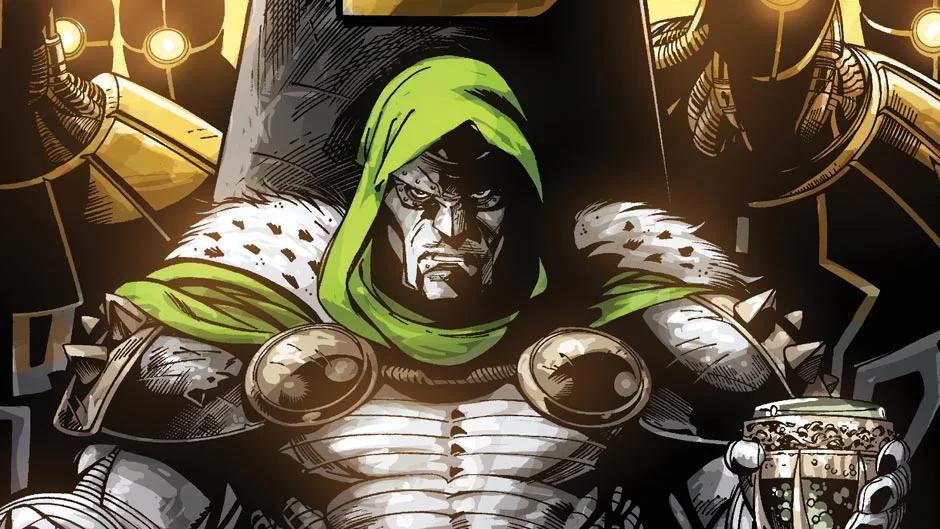
The Doom Prevails Commander deck from Magic: The Gathering | Marvel Super Heroes gives Grixis players something much more interesting than another generic control shell. Led by Doctor Doom, King of Latveria, the deck combines Villains, connive, discard and graveyard value into an engine that can slowly drain an entire Commander table while filtering through its library.
Doctor Doom costs and gives you two abilities that are designed to work together. Whenever you discard one or more land cards, each opponent loses 2 life. Then, at the beginning of combat on your turn, you can choose a Villain you control. That creature gains menace for the turn and connives, letting you draw a card and then discard a card. If the discarded card is a nonland, that Villain also gets a +1/+1 counter.
That means every combat gives you a decision. Discard a nonland and improve your attacker, or discard a land and make every opponent lose life. In a four-player Commander game, a single land discarded to Doom represents six total life lost across the table. Repeat that process while finding additional discard outlets and the damage adds up surprisingly quickly.
The stock precon already understands this plan better than it might first appear. Currency Converter, Containment Construct and Moonstone, Harsh Mistress all help you recover value from cards you discard, while several Villains take advantage of connive, graveyards or the counters Doom can generate. The best upgrade path is therefore not to transform Doom Prevails into ordinary Grixis goodstuff. It is to make the discard engine more consistent and ensure that throwing lands away actually benefits you.
If you are still deciding whether Doom Prevails is the Marvel precon you want to buy, our Marvel Commander Deck Value Guide compares all four Commander decks by price, upgrade potential and overall value.
Check the current Doom Prevails Commander deck price on TCGplayer.
How Doctor Doom Actually Wants to Win
The most important part of Doctor Doom, King of Latveria is the wording „one or more land cards.“ If an effect makes you discard three lands at the same time, Doom still triggers only once. That makes repeated smaller discard effects much more valuable than simply wheeling away an entire hand.
His own connive ability gives you one guaranteed opportunity each turn. If your hand contains a land you can afford to lose, you draw a card, discard the land and drain every opponent for two. If you need the land instead, discard a spell and the chosen Villain receives a +1/+1 counter. There is almost always a useful outcome.
The best upgrades take away some of the downside of choosing the land.
Currency Converter is already included in the precon and is exactly the kind of card you want to keep. When you discard, it can store the discarded card, and lands can eventually be converted into Treasure. Containment Construct similarly gives you the opportunity to play cards you discard during your turn. Moonstone, Harsh Mistress provides another way to turn discard into future resources.
The result is a deck where discarding a land does not necessarily mean losing access to that land forever. Once that engine is working, Doom’s life-loss trigger starts looking much less like compensation for throwing away resources and much more like free damage attached to something you already wanted to do.
The Best Cards to Cut from Doom Prevails
Doom Prevails has a strong core, so I would avoid ripping apart the Villain package simply to lower the average mana value. Doctor Doom specifically wants Villains available for his combat trigger, and several of the more expensive cards give the deck useful late-game power.
The first cards I would examine are the ones that contribute the least to discard, connive or the deck’s strongest Villain interactions. Stilt-Man, Towering Terror is flavorful, but it is one of the easier creatures to replace once you start tightening the list. Tri-Sentinel, Act of Vengeance occupies another expensive slot without contributing enough to the central discard engine, making it a reasonable cut for a card that generates value every time you loot or discard.
Extract Power is also expendable. The effect can produce a strong moment, but it is more situational than the repeatable engines available to us. Doom benefits enormously from permanents that keep rewarding you turn after turn, so one-shot effects have to clear a relatively high bar to justify their slots.
Titan of Littjara is a more difficult decision because it supports the Villain theme, and I would keep it in a lightly upgraded build. Once your deck becomes more focused on discard, however, five-mana tribal value starts competing with some extremely efficient synergy pieces. Consider it a flex slot rather than an automatic cut.
Finally, Terramorphic Expanse can eventually become a better untapped or cycling land. Unlike some Commander upgrade guides, though, I would not make land-base polishing the first priority. Doctor Doom actively benefits from having a healthy land count because lands become fuel for his ability later in the game. Replacing weak lands is fine; cutting too many lands altogether is not.
I would also keep Progenitor’s Icon initially. Three-mana rocks are slower than ideal, but the card fixes mana and has relevant Villain utility in this particular shell. It is not where I would spend my first cut.
The Best Doom Prevails Upgrades to Buy First
One of the cleanest upgrades is Tectonic Reformation. It gives every land in your hand cycling , which completely changes how excess lands function once Doctor Doom is on the battlefield. Instead of drawing your eighth land and wishing it were a spell, you can cycle it, draw another card and trigger Doom’s life-loss ability in the process. It turns late-game flooding into fuel for your commander without demanding that you add awkward discard cards purely for synergy.
Monument to Endurance is another excellent fit because it rewards the exact behavior the deck is already encouraging. Repeatedly discarding cards becomes an additional value engine instead of merely a cost, and current upgraded Doctor Doom lists strongly favor it alongside the precon’s existing discard pieces.
Archfiend of Ifnir gives the deck a much more controlling form of payoff. Whenever you discard or cycle another card while it is on the battlefield, it can steadily place -1/-1 counters across opposing creatures. That means the same lands you are discarding to drain opponents can also weaken their boards, allowing one action to contribute to two different victory plans.
Bone Miser is another natural engine. The exact reward depends on the type of card discarded, but Doom already wants to discard frequently, so Bone Miser turns those actions into cards, mana or creatures instead of allowing them to remain pure card disadvantage. This is particularly attractive in a build that expands beyond Doom’s single automatic connive trigger and includes several repeatable discard outlets.
For a more specialized premium addition, Crucible of Worlds solves one of the fundamental tensions in the deck. Doctor Doom wants lands in your hand so you can discard them, but Commander still requires you to continue making land drops. Crucible lets you play lands directly from your graveyard, which makes discarding them much less painful and allows fetchlands and other utility lands to become repeatable resources.
These cards do something that generic Grixis staples cannot: they make Doctor Doom himself better.
Budget Upgrades and Discard Engines
A strong Doom deck does not need to begin with expensive tutors or premium blue staples. Some of the most effective improvements are inexpensive cards that simply give you more opportunities to discard one land at a time.
Faithless Looting is almost tailor-made for the strategy. For one mana, you see additional cards and can deliberately put lands into the graveyard to trigger Doom. Flashback means the same card can do the job again later. Even though discarding two lands to one resolution still produces only one Doom trigger, the efficiency and card selection make it an excellent way to smooth awkward hands.
Faith of the Devoted gives the deck another source of life loss whenever you cycle or discard. Doom is already pressuring the entire table, so stacking another repeatable drain effect can turn what initially looks like incremental damage into a serious clock.
Glint-Horn Buccaneer works along similar lines. The more frequently you discard, the more damage you can generate without needing to connect in combat. That gives the deck resilience against creature-heavy boards where attacking becomes difficult.
Psychic Frog provides cheap card advantage while also giving you another reason to put cards into the graveyard, and Ledger Shredder can generate additional connive triggers over the course of a multiplayer game. Both fit naturally into the broader discard shell without forcing you to play weak cards simply because they contain the word „discard.“
The goal is not to include every possible discard payoff. Doom already gives you one of the most important payoffs in the command zone. What the deck needs most is a reliable rhythm of draw, discard, recover value and repeat.
Keep the Best Cards from the Original Precon
Doom Prevails contains several pieces that are good enough that I would build around them rather than replace them.
Iron Monger, Sadistic Tycoon is particularly important because it rewards your Villains for conniving. Glorious Purpose also turns the deck’s counter generation into additional long-term value, while Ultron, Unlimited provides a major threat that fits naturally into the Villain shell.
Chameleon, Master of Disguise works beautifully with the deck’s discard plan thanks to mayhem, allowing a card discarded at the right time to remain useful rather than simply disappearing into the graveyard. The same principle makes other mayhem cards much more attractive here than they would be in a normal Grixis creature deck.
Tombstone, Career Criminal is another card I would be reluctant to remove. It belongs to the group of pieces that help the deck profit from the graveyard and discard choices Doom is already forcing you to make.
The removal package is also unusually strong for a precon. Toxic Deluge, Blasphemous Act, Kindred Dominance, Chaos Warp, Bedevil, Terminate and Vandalblast give you enough interaction that buying more removal should not be the first priority.
The same applies to Black Market Connections. It does not specifically say „discard,“ but it is already an excellent source of resources and does not need to be replaced simply to make the deck more thematic.
Premium Upgrades Without Turning Doom into Grixis Goodstuff
Once the discard engine is functioning properly, premium cards can make Doom more consistent rather than changing what the deck is trying to accomplish.
Crucible of Worlds is one of the first premium pieces I would consider because the synergy is so direct. Fetchlands become reusable, discarded utility lands remain accessible and choosing a land when Doom connives becomes much less costly.
If you want to push the strategy further, Demonic Tutor and similar tutors can find whichever engine is missing, but they are luxury additions rather than necessities. A Doom deck with better synergy will generally be more satisfying than one where every weak card was simply replaced with a famous Grixis staple.
The same is true of Rhystic Study. It is an excellent Commander card, but it is not „the best Doctor Doom upgrade“ simply because it draws cards. It does not interact with Doom’s discard trigger, Villains or connive. If you already own one, the card is obviously playable. If you are buying specifically to improve Doom Prevails, I would purchase the discard engine first.
That distinction matters when upgrading on a real budget. A few targeted cards such as Tectonic Reformation, Archfiend of Ifnir and Bone Miser can change how the entire deck functions for less than the cost of one premium generic staple.
How Many Lands Should Doctor Doom Play?
Doctor Doom is one of those commanders where cutting lands to make the deck „faster“ can easily backfire.
You need lands to cast your spells, but once you have enough mana, additional lands become ammunition. Every spare land in hand can potentially be converted into card selection, graveyard value and two life lost by each opponent. Cards with cycling become especially appealing because they can discard themselves without requiring another engine on the battlefield.
That means I would be comfortable keeping the land count slightly higher than in an aggressively optimized Grixis deck. The exact number depends on how many cycling lands and ways to replay lands you add, but the broader principle is more important: lands are not dead draws in Doctor Doom.
As the mana base improves, cycling lands such as Fetid Pools and Canyon Slough become especially useful because they function as mana early and Doom triggers later. If you introduce Crucible of Worlds, fetchlands such as Polluted Delta, Bloodstained Mire and Scalding Tarn gain additional value beyond simple color fixing.
I would still upgrade the spell engine before spending heavily on premium lands. Our Ultimate Landbase Upgrade Guide covers the steps between a functional precon mana base and a fully optimized fetchland package.
Doctor Doom or Loki?
Doom Prevails also gives you Loki, the Deceiver as an alternative commander, and the choice changes the deck substantially.
Doctor Doom rewards discarding, Villains and incremental life loss. His games tend to revolve around squeezing additional value from the cards moving between your hand and graveyard while gradually draining the table.
Loki pushes the Villain shell toward copying and opportunistic value instead. Many cards can function under either commander, but the most specialized land-discard pieces make much more sense when Doctor Doom remains in the command zone.
For this upgrade path, I would keep Doctor Doom, King of Latveria at the helm and allow Loki to remain part of the ninety-nine. That preserves the excellent Marvel Villain flavor while giving the deck a much clearer mechanical identity.
If you are still deciding whether Doom Prevails is the strongest purchase among the four Marvel decks, our Marvel Commander Deck Value Guide compares them directly.
Final Verdict
Doom Prevails becomes much more dangerous when you stop treating Doctor Doom, King of Latveria as a generic Grixis control commander.
Doom does not tax opposing spells, and he does not need a table full of expensive control staples to work. His engine is much more personal: he wants you to connive, discard lands, profit from the graveyard and surround him with Villains that benefit from the same actions.
The stock precon already gives you an excellent foundation with Currency Converter, Containment Construct, Moonstone, Harsh Mistress, Iron Monger, Sadistic Tycoon, Ultron, Unlimited and a genuinely strong interaction package. There is no reason to tear that apart.
Instead, remove a handful of lower-impact cards and add engines such as Tectonic Reformation, Monument to Endurance, Archfiend of Ifnir and Bone Miser. If your budget allows it, Crucible of Worlds makes the land-discard plan considerably more forgiving and gives the deck another way to turn Doom’s demands into long-term advantage.
If you already own Doom Prevails, targeted singles are the most efficient way to make those improvements. If you are still looking for the sealed deck, compare its current price before deciding how much of your budget to reserve for upgrades.
Check the current Doom Prevails Commander deck price on TCGplayer.
Doctor Doom does not need to stop everyone else from playing Magic. Give him enough ways to turn every discarded land into value, and the table will lose life simply because Doom decided those resources were no longer worthy of his hand.


