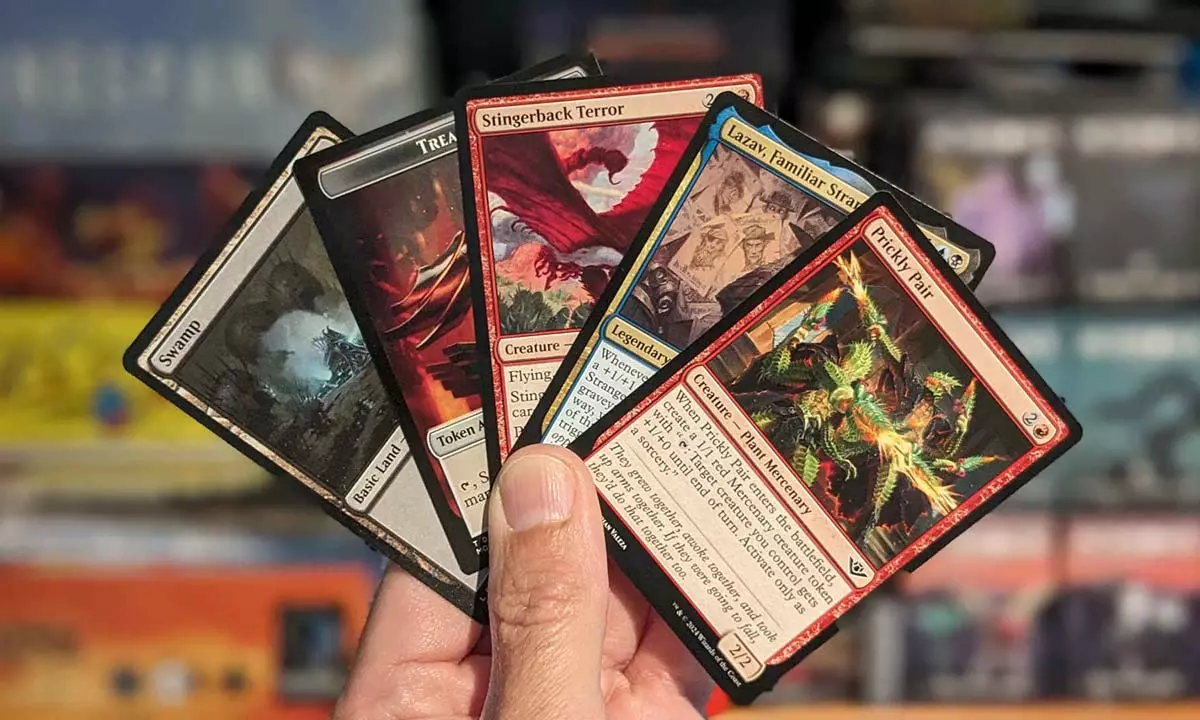
A Commander game can last an hour, but one of its most important decisions happens before the first turn. You draw seven cards, look at your lands and spells, and decide whether this is the hand you want to play. Sometimes the answer is obvious. Other times, a hand full of powerful cards looks irresistible even though it won’t actually do anything for the first four turns.
Knowing when to mulligan in Commander is one of the easiest ways to improve your results without changing a single card in your deck. A good opening hand doesn’t need to contain your best cards or your eventual win condition. It needs to give you a realistic plan for the opening turns.
Commander also has a particularly forgiving mulligan rule in multiplayer games: your first mulligan is free. That makes it easier to reject a questionable opening hand without immediately sacrificing card advantage.
This guide explains how Commander mulligans work, how to recognize a playable starting hand and when you should keep or ship your seven cards. We’ll also examine realistic opening hands from different strategies, including ramp-heavy green decks, artifact decks and creature-based Commander precons.
How Does Mulligan Work in Commander?
Commander uses the London mulligan procedure, with an important adjustment for multiplayer games. Players begin with seven cards and may choose to mulligan before the game starts. When you mulligan, you shuffle your hand back into your library and draw seven new cards.
The difference is how many cards you eventually keep.
In a typical multiplayer Commander game, the first mulligan doesn’t count against your hand size. If you dislike your initial seven cards, you can shuffle them away and draw seven more without losing a card.
Additional mulligans require you to put cards from your hand on the bottom of your library after deciding to keep.
| Hand Attempt | Cards Drawn | Cards Kept |
|---|---|---|
| Initial opening hand | 7 | 7 |
| First mulligan | 7 | 7 |
| Second mulligan | 7 | 6 |
| Third mulligan | 7 | 5 |
| Fourth mulligan | 7 | 4 |
The important detail is that you always draw seven cards when taking a mulligan. You don’t draw six after your second attempt or five after your third. Instead, you select the best cards from the new seven and place the required number on the bottom of your library in any order.
Players declare whether they’re taking a mulligan in turn order, and those who choose to mulligan do so simultaneously. Once you decide to keep, you can’t change your mind and mulligan again.
The free first mulligan applies to multiplayer Commander because of Magic’s multiplayer mulligan rule. In a two-player Commander game, the normal mulligan procedure applies without that multiplayer free-mulligan benefit.
What Makes a Good Commander Opening Hand?
A strong Commander opening hand usually does three things: it provides reliable mana, lets you cast something meaningful during the first few turns and advances your deck’s actual strategy.
That doesn’t necessarily mean having three lands, Sol Ring and your favorite payoff card every game. You don’t need a perfect hand. You need a functional one.
For most casual Commander decks, two to four lands is a reasonable starting range, assuming your remaining cards support that mana development. A three-land hand with an inexpensive mana rock and several castable spells is often excellent. A two-land hand with cheap ramp or reliable card selection may also be perfectly playable.
The real question is whether you can explain what your first three turns are likely to look like.
If you can play a land on turn one, accelerate or develop your battlefield on turn two and make another useful play on turn three, you probably have a reasonable hand. If your entire plan depends on drawing exactly the right land or spell, the hand is considerably riskier.
Lands Matter More Than Exciting Spells
One of the most common Commander mistakes is keeping a hand because it contains powerful cards rather than because it can cast them.
Imagine opening with Avenger of Zendikar, Craterhoof Behemoth and several other expensive creatures, but only one Forest. The cards are impressive, yet you may spend multiple turns watching opponents develop their boards while hoping to draw lands.
A less spectacular hand with three lands, an inexpensive ramp spell and a modest creature may lead to a much stronger game.
Commander rewards long-term resource development. The goal isn’t to have the most exciting seven cards. It’s to build a position where your exciting cards can eventually matter.
Early Plays Give Your Hand Structure
Cards like Arcane Signet, Mind Stone, Nature’s Lore and Llanowar Elves can make opening hands substantially more reliable.
These cards help move your deck toward its important middle turns, especially when your commander costs four or more mana.
Card selection also matters. Ponder and Preordain can help find additional lands or spells, which sometimes makes a two-land hand more appealing.
However, early plays need to fit the hand you’re keeping. A ramp spell you cannot cast with your available colors doesn’t make an otherwise unplayable hand safe.
Five Commander Opening Hands: Keep or Mulligan?
The best way to understand mulligan decisions is to examine actual combinations of cards. These examples assume a typical four-player casual Commander game, with the commander beginning in the command zone.
They are illustrative hands for suitable decks, not guaranteed draws from any particular stock precon. Specific decisions can change depending on your commander, deck construction and opponents.
Hand 1: Three Lands, Sol Ring and Castable Spells – Keep
Imagine opening with three basic lands, Sol Ring, Arcane Signet, Beast Whisperer and Swords to Plowshares in a deck whose color identity includes green and white.
This is an excellent opening hand. You have several lands, fast mana, a potential card-advantage engine and inexpensive interaction.
Sol Ring and Arcane Signet can accelerate your development dramatically, while Beast Whisperer gives you a way to generate additional cards once creatures begin entering your hand and being cast.
You don’t know exactly how the game will unfold, but you already have a credible plan.
Verdict: Keep. The hand contains sufficient mana, meaningful acceleration and useful spells.
Hand 2: One Land and Six Expensive Spells – Mulligan
Your opening hand contains one Forest, Gigantosaurus, Ghalta, Primal Hunger, Avenger of Zendikar, Rishkar’s Expertise, Overwhelming Stampede and The Great Henge.
This hand looks powerful, but it has almost no early functionality. Without drawing additional lands or cheap ramp, you’ll struggle to participate in the opening turns.
Even Ghalta’s cost reduction doesn’t solve the problem because you have no meaningful creature power on the battlefield to reduce her cost.
A single land isn’t automatically a mulligan in every Commander deck, but a one-land hand containing only expensive spells is about as clear a warning sign as you can find.
Verdict: Mulligan. You’re relying on multiple favorable draws before the hand begins functioning.
Hand 3: Two Lands, Cheap Ramp and Card Draw – Usually Keep
Suppose your hand contains two Forest cards, Llanowar Elves, Nature’s Lore, Beast Whisperer, Goreclaw, Terror of Qal Sisma and Return of the Wildspeaker.
Two lands might initially look risky, but the cheap acceleration changes the calculation considerably.
You can cast Llanowar Elves on your first turn, potentially access additional mana through Nature’s Lore and develop toward your larger creatures without needing to draw several lands immediately.
You’re still vulnerable to early removal or an awkward draw sequence. But unlike the previous example, you have a functional plan even before drawing another card.
Verdict: Usually keep. The ramp significantly reduces the risk of starting with only two lands.
Hand 4: Five Lands and Two Expensive Spells – Usually Mulligan
Consider five lands alongside Blasphemous Act and Etali, Primal Storm in a mono-red Commander deck.
This hand has the opposite problem from a mana-starved opening. You can make land drops, but you don’t have much to do with your mana during the first several turns.
Blasphemous Act is situational removal, while Etali doesn’t immediately solve the problem of having no early battlefield development. You’ll need to draw relevant spells to build momentum.
Some control decks can tolerate land-heavy hands better than aggressive decks, particularly when their commander provides card advantage. But most creature-focused Commander decks would prefer a more balanced opening.
Verdict: Usually mulligan. Adequate mana is valuable, but you still need productive spells.
Hand 5: Three Lands, Ramp and a High-Cost Commander – Keep
Imagine playing Lathliss, Dragon Queen with an opening hand containing three Mountain cards, Sol Ring, Dragonlord’s Servant, Dragon’s Hoard and Scourge of Valkas.
This hand is particularly attractive because its early plays support the commander directly.
Sol Ring accelerates your mana, Dragonlord’s Servant reduces the cost of your Dragon spells and Dragon’s Hoard provides additional mana while supporting later card draw.
Rather than hoping to survive until you naturally reach six lands, you’re actively building toward casting Lathliss earlier.
Verdict: Keep. Your opening hand supports the commander’s game plan and provides useful development before she arrives.
Should You Always Take Your Free Commander Mulligan?
No, but you should be willing to use it.
A common mistake is treating the free mulligan as something you should always take unless your first hand is exceptional. That approach can be just as unhelpful as refusing to mulligan at all.
If your opening seven contains three lands, early acceleration and relevant spells, there’s usually no reason to throw it away in search of something spectacular.
However, a mediocre hand becomes much easier to reject when the first replacement still leaves you with seven cards.
The real value of the free mulligan is that it lets you avoid clearly dysfunctional starts without immediately giving up a card.
A useful way to think about it is simple: would you be comfortable playing the first three turns with this hand if your next draws weren’t particularly helpful?
If the answer is yes, keeping may be sensible. If the answer is no, using the free mulligan is often the better decision.
Don’t confuse a playable hand with a perfect one. Trying to find Sol Ring every game is not a sustainable mulligan strategy.
How Your Commander Changes Mulligan Decisions
Your commander has an enormous influence on what qualifies as a good opening hand.
A low-cost commander that creates resources may make a relatively modest hand more appealing because you already have access to a reliable engine outside your deck. A six- or seven-mana commander usually demands more early acceleration.
This is why the same number of lands doesn’t mean the same thing in every strategy.
Aggressive and Creature-Based Decks
Aggressive Commander decks generally want to establish a battlefield quickly.
A low-cost creature, two or three lands and a reliable follow-up play can be more valuable than several expensive finishers. The earlier you develop meaningful pressure, the sooner your other cards begin supporting your plan.
For example, a Giada, Font of Hope deck wants access to white mana early, followed by inexpensive Angels that help future creatures enter with additional counters.
An opening hand containing three expensive Angels but no early plays may be weaker than one featuring Giada-compatible mana and a modest early Angel.
Ramp and Big-Creature Decks
Ramp strategies place greater importance on early mana development.
Decks built around commanders such as Ghalta, Primal Hunger or Lathliss, Dragon Queen often want inexpensive acceleration to ensure their larger creatures can enter ahead of schedule.
However, not all ramp is equally useful. A two-mana ramp spell you can cast immediately is more valuable in your opening hand than a costly mana effect you cannot deploy until turn four.
Look for hands that can reach your commander’s important mana threshold, rather than hands filled with cards that merely become powerful after you already have plenty of mana.
Control and Spellslinger Decks
Control decks can evaluate hands somewhat differently because inexpensive interaction and card selection are often more important than establishing creatures.
A hand with three lands, Counterspell, Ponder and other useful interaction may provide an excellent start in a suitable blue deck.
The important distinction is that reactive spells need to match the table you’re playing against. Keeping a hand containing only situational removal can leave you unable to progress your own strategy.
Card selection helps smooth awkward draws, but it shouldn’t be used to justify every questionable opening hand.
Combo and High-Powered Commander
High-powered decks may mulligan more aggressively for acceleration, tutors or specific engine pieces.
However, the exact strategy depends heavily on the deck and expected opponents. A combo deck that needs a particular early sequence has different requirements from a casual Zombie tribal list.
It’s also important to distinguish ordinary multiplayer Commander from competitive formats with different rules. For example, MTG Arena’s Competitive Brawl has its own mulligan environment and should not be treated as identical to multiplayer Commander.
For most casual tables, the priority is still straightforward: keep a hand that develops your strategy reliably rather than gambling on an unusually explosive start.
How Many Lands Should Be in Your Commander Opening Hand?
For many casual decks, three lands is a comfortable opening, but it isn’t a universal requirement.
Two-land hands can be strong when they contain inexpensive ramp, card selection or a low mana curve. Four-land hands can be excellent for strategies with expensive commanders or dependable card advantage.
Even one-land hands can sometimes be playable in highly optimized decks with substantial fast mana, although they’re usually too risky for typical preconstructed Commander decks.
Rather than using a strict land-count rule, consider how your mana development interacts with the other cards in your hand.
| Opening Lands | General Assessment |
|---|---|
| 0 | Almost always mulligan |
| 1 | Usually too risky without exceptional support |
| 2 | Often keepable with cheap ramp or card selection |
| 3 | Strong starting point for many decks |
| 4 | Usually reasonable with productive spells |
| 5 | Situational; risk of too many lands |
| 6–7 | Usually mulligan |
A two-land hand containing Arcane Signet can be better than a four-land hand filled with expensive spells. Likewise, a five-land hand in a landfall strategy may be considerably more appealing than the same hand in a low-curve aggressive deck.
The goal is not to start every game with exactly three lands. It’s to maximize your chances of developing mana and making useful plays.
For broader deck construction advice, our How to Build a Commander Deck guide explains how to balance lands, ramp, card draw and interaction across the full 100-card list.
Five Commander Mulligan Mistakes to Avoid
Even experienced players occasionally keep hands they shouldn’t. The mistakes usually involve overvaluing individual cards or underestimating how important early development will be.
The first mistake is keeping a hand just because it contains powerful cards. Craterhoof Behemoth is an outstanding finisher, but it does very little for a player stuck on two lands without creatures.
The second is treating every mana rock as a replacement for land. Sol Ring is powerful, but it cannot independently produce colored mana. A hand with one colorless-producing land, Sol Ring and several spells requiring colored mana can still be extremely awkward.
Third, players sometimes take too many mulligans while searching for a perfect combination. A functional seven-card hand is often preferable to repeatedly reducing your options in pursuit of an explosive start.
Fourth, don’t ignore the commander you’re playing. If your deck revolves around a commander that costs six mana, your opening hand should usually make progress toward that requirement. If your commander costs two mana and provides useful value, you may be able to keep a hand that would look weak in another deck.
Finally, avoid treating multiplayer Commander like a one-on-one race every game. Several opponents mean more interaction, longer board development and a greater chance that your first major threat will be answered. Opening hands with sustainable resources often outperform those that spend everything on one explosive but fragile play.
When Should You Mulligan a Commander Precon?
Preconstructed Commander decks often have higher mana curves and less efficient acceleration than optimized custom lists. That makes mulligan decisions particularly important.
If you’re playing a stock precon for the first time, look for a combination of lands, inexpensive ramp and early cards that support its main strategy.
For Calling All Angels, that means enough white mana to cast Giada, Font of Hope and an Angel or support spell soon afterward. For Wretched Ranks, look for black mana, early Zombie development and a path toward Ghoulcaller Gisa.
Keen Engineering benefits from early artifacts that help Sai, Master Thopterist begin generating Thopters. Reign of Dragons wants mana acceleration before deploying Lathliss, Dragon Queen, while Tramplesaurus Rex values early creature power and green ramp to make Ghalta cheaper.
These examples demonstrate why mulligan decisions should support the deck’s identity rather than follow a rigid formula.
You can explore complete preconstructed decklists in the PreconForge Commander Precon Database, including the original mana bases and cards that support each commander’s early game.
How to Practice Better Commander Mulligans
One of the most useful ways to improve mulligan decisions is to practice without playing a full game.
Shuffle your deck and draw seven cards. Before making any decisions, ask what the hand can realistically accomplish over its first three turns. Do you have access to the necessary colors? Can you cast an early spell? Can you develop toward your commander?
If the answer is unclear, set the hand aside and draw another seven.
Repeat this process with several different opening hands, paying particular attention to how often you’re forced to rely on drawing a specific land or ramp spell.
You can also goldfish your opening turns by playing several turns without an opponent. This doesn’t simulate interaction or multiplayer politics, but it reveals whether your deck consistently develops mana and deploys meaningful spells.
If you repeatedly find hands containing only one land, too many expensive spells or no useful early development, the problem may not be your mulligan decisions. It may be the deck itself.
At that point, adding more lands, reducing the mana curve or including better ramp will usually help more than becoming increasingly aggressive with mulligans.
PreconForge Verdict: Keep the Hand That Can Actually Play
The best Commander mulligan strategy isn’t about finding the strongest seven cards in your deck. It’s about finding a starting hand that can participate in the game.
For most casual Commander decks, that means reliable lands, early acceleration or card selection and at least one useful spell that moves your strategy forward. Three lands and a reasonable mana curve is a good starting point, but two-land hands can also be excellent when your supporting cards make them reliable.
Remember that multiplayer Commander gives you a free first mulligan. Use it when your hand is clearly dysfunctional, but don’t throw away perfectly playable hands while searching for Sol Ring or a specific combination of cards.
Most importantly, think about your first three turns rather than the most powerful card in your hand.
A hand that lets you make steady progress will usually create more opportunities than one that depends on drawing several perfect cards.
Our final recommendation: Keep functional hands, ship hands that cannot develop mana or meaningful plays, and use the free multiplayer mulligan to avoid games where your deck never gets started.


