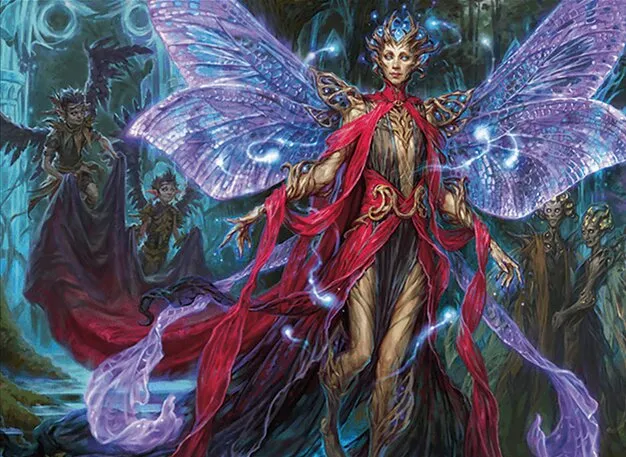
Fae Dominion has aged unusually well for a Commander precon. The Wilds of Eldraine deck already contains many of the cards you would expect to add when building Dimir Faeries from scratch, including Alela, Cunning Conqueror, Scion of Oona, Glen Elendra Archmage, Brazen Borrower and Kindred Dominance.
That makes upgrading the deck less about replacing half the list and more about deciding what kind of Faerie deck you actually want to play.
With Tegwyll, Duke of Splendor in the command zone, the cleanest direction is a mix of evasive Faerie pressure and resilient card advantage. Tegwyll gives your other Faeries +1/+1, then replaces them with cards whenever they die at the cost of 1 life each. The deck can attack through the air when the coast is clear, but it is also surprisingly comfortable trading creatures or losing part of its board because Tegwyll makes those losses much less painful.
The best upgrades therefore do not simply make the deck faster. They make its Faerie package denser, give you more reasons to keep mana open and help turn a swarm of small flying creatures into a real multiplayer win condition.
Fae Dominion Already Has a Strong Core
One reason to be conservative with this precon is that Wizards gave it a surprisingly complete Faerie package from the beginning.
Alela, Cunning Conqueror is the alternate commander and one of the strongest cards in the deck even when Tegwyll remains in charge. Whenever you cast your first spell during each opponent’s turn, Alela creates a 1/1 Faerie Rogue with flying. She also rewards combat damage from your Faeries by goading opposing creatures, which can gradually force the rest of the table to attack one another.
That makes instant-speed play valuable, but it is important not to exaggerate how much of the stock deck has flash. Fae Dominion is not simply a deck where every creature gets cast on an opponent’s end step. Instead, it combines cheap interaction, flash creatures and instant-speed spells so that you can decide late in the turn cycle whether to disrupt something or add to your board.
The stock list already supports that plan with Arcane Denial, Reality Shift, Snap, Frantic Search, Quickling and Brazen Borrower. Nymris, Oona’s Trickster similarly rewards you for casting your first spell during each opponent’s turn.
Meanwhile, Obyra, Dreaming Duelist turns every additional Faerie into a small life-loss trigger, and Scion of Oona provides another anthem while protecting your other Faeries with shroud.
Those are not cards we need to add. They are already reasons to buy and build around the precon.
Tegwyll Wants More Faeries, Not Just More Flash
The old version of this guide leaned very heavily into the idea that the deck should become a pure flash-tempo list. That is one possible direction, especially under Alela, Cunning Conqueror, but Tegwyll himself rewards something slightly different.
His anthem only matters when you actually have Faeries in play, and his card-draw trigger only works when another Faerie dies.
That means creature type density matters.
If too many Faerie slots are replaced with generic control creatures, artifacts and expensive finishers, Tegwyll becomes a three-mana anthem with fewer meaningful targets. A stronger Tegwyll build wants enough Faeries that his two abilities remain relevant throughout the game.
Talion, the Kindly Lord is one of the strongest additions for that reason. Talion is a flying Faerie Noble that provides an entirely different source of card advantage while punishing opponents for repeatedly using a chosen mana value.
Faerie Mastermind is another excellent fit. It has flash and flying, costs only , and can draw cards whenever an opponent draws their second card in a turn. In multiplayer Commander that ability has plenty of opportunities to trigger, and Mastermind remains exactly the kind of cheap evasive Faerie Tegwyll wants to strengthen.
Spellstutter Sprite is much smaller, but the combination of flash, flying and interaction scales naturally with a large Faerie board. It lets you add another creature without completely abandoning the reactive game plan.
And if you want a more aggressive approach, Faerie Swarm and other generic bodies are less interesting than cards that provide value while preserving the creature type. Every slot should ideally do more than merely say “Faerie.”
Lean Into Playing on Everyone Else’s Turn
Once the Faerie count is healthy, the deck becomes much stronger when it can keep mana untapped.
The reason is not simply that blue decks like counterspells. Leaving mana open creates uncertainty.
You may need Counterspell for a board wipe. You may want to flash in Faerie Mastermind. You may cast something inexpensive to trigger Alela, Cunning Conqueror or Nymris, Oona’s Trickster. And if nothing important happens, you can spend that mana before your turn comes back around.
Kindred Discovery is expensive at five mana, but it is one of the more powerful engines you can add if the deck stays heavily committed to Faeries. Naming Faerie means both entering creatures and combat damage can keep your hand full.
Bitterblossom approaches the problem from another angle. It supplies a Faerie Rogue every upkeep for only one life, giving Tegwyll more anthem targets, more attackers and more creatures that can later die and become cards.
The life loss deserves some respect because Tegwyll himself can also cost life as Faeries die. The deck has no reason to pretend life is unlimited. But Commander starts at 40, and converting small amounts of life into sustained cards and creatures is usually a worthwhile exchange when the rest of the deck is built to capitalize on them.
Black Market Connections is not a Faerie card, so I would not overload the deck with effects like it, but it demonstrates the broader principle: repeatable resources are more useful than another oversized creature that does nothing for the tribal engine.
Your Faeries Need a Way to End the Game
One weakness of Faerie decks is that they can generate a beautiful board full of evasive creatures without actually killing three opponents quickly enough.
Tegwyll helps by making every other Faerie larger, but a table starting at a combined 120 life is still a substantial amount of damage.
That makes tribal finishers particularly valuable.
Coat of Arms can create enormous damage, although it is symmetrical and therefore dangerous against other typal decks. Door of Destinies is slower but one-sided. Neither is automatically necessary, and I generally prefer effects that do something besides simply increase power.
Kindred Dominance, already in the precon, is one of the best examples. Choosing Faerie can clear away most opposing creatures while leaving your own board intact. Seven mana is a lot, but this is exactly the sort of expensive spell that earns its slot because it can turn a developed Faerie board into lethal damage on the following attack.
The same is true of Shadow Puppeteers, another stock card worth respecting. Your creatures with flying get an additional power boost, and its combat trigger can turn another creature into a flying 4/4 Dragon temporarily. It is expensive, but unlike generic top-end creatures, it actually helps the deck close games.
That distinction is important when deciding what to cut.
What I Would Cut from Fae Dominion First
Temple of the False God remains one of the easiest cuts.
Fae Dominion wants to cast its three-mana commander reliably and then continue holding up blue and black mana. A land that cannot produce mana before you control five lands is a real cost, particularly in an opening hand.
Replacing it with an actual blue-black source improves the deck without changing any of its spells.
Hullbreaker Horror is a more interesting decision. The card is enormously powerful and has flash, so calling it bad in this deck would be wrong. The issue is simply that it costs seven mana and is not a Faerie. If your goal is to make Tegwyll as tribal as possible, it is one of the expensive generic power cards you can turn into a cheaper Faerie or tribal payoff.
If you enjoy having a huge control finisher, keep it.
Nettling Nuisance is another possible cut, but not because it is simply irrelevant. It is itself a Faerie Rogue with flying and its attack trigger can create Faerie tokens under opponents‘ control, then goad creatures they control if they already have a Faerie. That can produce interesting multiplayer politics.
What it does not do particularly well is advance the cleaner Tegwyll plan of building your own Faerie board. If you want fewer political cards and a more focused tribal deck, this is a reasonable slot to change.
I would also examine the generic card-draw package rather than automatically removing every sorcery. Distant Melody, for example, is sorcery speed, but in a developed Faerie deck it can draw a huge number of cards for four mana. Being a sorcery does not automatically make a card poor in a deck that enjoys instant-speed play.
Likewise, Nightmare Unmaking should not be cut merely because it costs five. Exiling creatures is useful, and Commander decks still need ways to recover when the board gets away from them.
The right cuts depend on what you are replacing them with.
The Mana Base Is the Cheapest Place to Gain Consistency
The stock mana base already contains Secluded Glen, Choked Estuary, Sunken Hollow, Darkwater Catacombs, Tainted Isle and Exotic Orchard.
So those are not upgrades either.
The simplest improvement is replacing weaker lands such as Temple of the False God and gradually reducing the number of lands that regularly enter tapped.
Underground River is an inexpensive way to get untapped access to either color. Darkslick Shores is excellent in the early turns when hitting Tegwyll on curve matters most, while Shipwreck Marsh becomes reliable once you are past the opening turns.
At a higher budget, Watery Grave, Polluted Delta and similar premium lands improve consistency further, but they are not required for the deck to function.
Fae Dominion is only two colors. You can get a very stable mana base without spending heavily.
The Best First Upgrades
If I were upgrading the stock deck gradually, I would start with cards that improve several parts of the strategy at once.
Faerie Mastermind gives you another cheap Faerie, another flying attacker, instant-speed deployment and repeatable card advantage.
Spellstutter Sprite adds a Faerie while interacting with the stack.
Talion, the Kindly Lord is a stronger standalone threat that remains completely on-theme.
Bitterblossom gives you a continuous source of Faeries without requiring more cards from your hand.
And Kindred Discovery can become a major card-advantage engine once the creature package is sufficiently concentrated.
Those upgrades improve Tegwyll’s actual plan instead of simply stuffing more individually powerful blue-black cards into the deck.
You can then decide whether you want the second phase of the upgrade to emphasize combat, flash interaction or sacrifice synergies.
Tegwyll or Alela: Which Commander Should Lead?
This is one place where the original Fae Dominion deck gives you a genuine choice.
Tegwyll, Duke of Splendor is better suited to a traditional Faerie typal plan. He immediately strengthens the army and makes creature deaths less costly, so he rewards having a high density of actual Faeries.
Alela, Cunning Conqueror pushes much harder toward flash and instant-speed interaction. She rewards casting spells on every opponent’s turn and can generate Faerie tokens without requiring those spells themselves to be Faeries.
That difference matters.
If your favorite part of the precon is passing with untapped mana, countering or bouncing threats and creating tokens along the way, Alela may eventually be the commander you prefer.
If you want Faerie tribal itself to remain the center of the deck, Tegwyll is the cleaner build-around.
For this upgrade guide, I would keep Tegwyll in the command zone and use Alela as one of the strongest cards in the 99. That keeps the article focused while still preserving what makes the original precon flexible.
PreconForge Verdict
Fae Dominion does not need a dramatic rebuild.
Its strongest advantage is that many of the obvious Faerie upgrades were already included in the original deck. Alela, Cunning Conqueror, Scion of Oona, Glen Elendra Archmage, Obyra, Dreaming Duelist, Reflections of Littjara and Kindred Dominance give you a real tribal foundation straight from the box.
The best Tegwyll upgrade path is therefore about concentration rather than reconstruction. Add more Faeries that provide interaction or cards, improve the mana base, remove some of the generic high-end pieces and make sure your growing flying army has enough ways to finish a multiplayer game.
Most importantly, do not force the deck into being something it is not.
Tegwyll is not simply an aristocrats commander, and Fae Dominion is not purely a flash-control deck. Its strength lies between those ideas: evasive tribal pressure backed by interaction, with a commander who makes losing creatures far less punishing than it normally would be.
If you want to improve the mana package beyond a few individual swaps, our Mana Base Upgrade Guide explains how to decide which tapped lands and duals are worth replacing without spending more than the deck itself.


