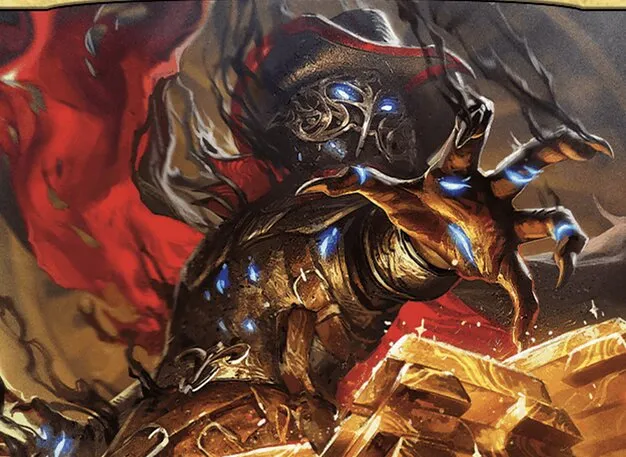
Grand Larceny takes one of Commander’s most entertaining ideas and builds an entire deck around it: winning with everybody else’s cards.
At the center of the deck is Gonti, Canny Acquisitor, a Sultai commander that rewards your creatures for slipping through opposing defenses. Every opponent you hit can give you another card to cast from exile, while Gonti makes those stolen spells cheaper and fixes the colors needed to cast them.
That gives the deck an unusual deck-building challenge. You cannot control what cards your opponents put on top of their libraries, so your own 99 needs to provide the consistency. Cheap evasive attackers, efficient ramp and reliable ways to generate combat-damage triggers are more important than filling the deck with expensive theft spells.
Grand Larceny already contains a strong foundation for that strategy. The best upgrades make Gonti faster, make successful combat more reliable and give you more ways to profit from the cards your opponents provide.
Gonti Wants You to Hit More Than One Opponent
Gonti, Canny Acquisitor costs for a 5/5 Aetherborn Rogue.
Spells you cast but do not own cost less to cast. Whenever one or more creatures you control deal combat damage to a player, you look at the top card of that player’s library and exile it face down. You can look at and cast that card for as long as it remains exiled, and Gonti lets you spend mana as though it were mana of any color to cast it.
The most important part of that ability is “a player.”
If three of your creatures all hit the same opponent in the same combat-damage step, Gonti triggers once for that player. If you send one creature at each of three opponents and all three connect, Gonti can trigger three times.
That makes spreading combat damage around the table extremely valuable.
You are not trying to build the largest attacking army. You are trying to create several attackers that are difficult to block. A 1/1 unblockable creature may contribute more to Gonti’s engine than a 6/6 without evasion.
The stock deck already understands this principle through cards such as Slither Blade, Triton Shorestalker, Silhana Ledgewalker and Shadowmage Infiltrator.
The best upgrades push that idea further.
Grand Larceny Already Has an Excellent Theft Core
Before adding more theft effects, it is worth recognizing how much of Gonti’s real engine already comes in the precon.
Thief of Sanity is almost perfect for the deck. It has flying, only costs three mana and gives you another way to exile cards from an opponent’s library after connecting.
Fallen Shinobi provides one of the deck’s most explosive combat-damage payoffs. Ninjutsu lets it replace an attacker that has already slipped past blockers, and a successful hit can exile two cards from an opponent’s library and let you cast them without paying their mana costs.
Nashi, Moon Sage’s Scion works along similar lines, while Silent-Blade Oni gives the deck a much larger ninjutsu threat capable of casting a nonland card directly from an opponent’s hand.
Gonti, Lord of Luxury provides theft without requiring combat at all, and Siphon Insight gives you another inexpensive way to turn an opponent’s library into resources.
Then there is Brainstealer Dragon. Seven mana is expensive, but it provides a repeatable way to play cards from opposing libraries while punishing opponents whenever you cast something they own. Unlike a generic seven-mana creature, that effect directly supports what the entire deck is already doing.
Current Gonti lists continue to heavily favor this core. Thief of Sanity, Slither Blade, Doc Aurlock, Grizzled Genius, Felix Five-Boots and Brainstealer Dragon remain among the commander’s highest-synergy cards.
Felix Five-Boots Is One of the Best Cards in the Deck
Felix Five-Boots deserves special attention because he changes how much value every successful attack can generate.
If combat damage dealt by one of your creatures causes a triggered ability of a permanent you control to trigger, Felix causes that ability to trigger an additional time.
Gonti’s theft ability qualifies.
If one of your creatures connects with an opponent while Gonti and Felix are both on the battlefield, Gonti’s ability can trigger twice for that opponent instead of once. Spread successful attackers across several opponents and a single combat step can create a substantial pile of stolen cards.
Felix also multiplies many of the other combat-damage abilities already present in the deck.
Thief of Sanity, Cold-Eyed Selkie and Fallen Shinobi all become significantly more dangerous when their triggers happen twice.
This is one reason I would avoid treating Felix merely as an alternate commander sitting in the 99. Under Gonti, he is one of the strongest engine pieces in the entire precon.
The Best Upgrades Start With More Reliable Infiltrators
Changeling Outcast is exactly the kind of card Gonti wants.
It costs only , cannot block and cannot be blocked. The downside barely matters in a deck where its primary job is to connect with whichever opponent gives you the safest attack.
Once Gonti reaches the battlefield, a one-mana unblockable creature effectively becomes a repeatable theft enabler.
Invisible Stalker is another excellent addition. It costs , has hexproof and cannot be blocked. Unlike many small evasive creatures, it is also difficult for opponents to remove with targeted interaction, making it an extremely reliable carrier for Gonti’s combat trigger throughout a long game.
Both cards illustrate what this deck actually needs from its early creatures. Their printed power is almost irrelevant. Connecting is the resource that matters.
Thada Adel, Acquisitor pushes the same idea further. Islandwalk can make her effectively unblockable against many Commander decks, and combat damage lets you search the damaged player’s library for an artifact and exile it for you to play later.
That means the same combat hit can potentially give you a card through Thada and another through Gonti.
Another interesting addition is Nightveil Specter. Flying helps it connect, and its own combat-damage trigger exiles the top card of the damaged opponent’s library for you to play. It creates exactly the kind of redundant theft engine Gonti likes without requiring a separate setup.
You do not need dozens of these creatures. The objective is simply to increase the chance that by the time Gonti enters on turn four or five, you already have two or three attackers capable of getting through.
Doc Aurlock Makes Stolen Cards Much Easier to Cast
Doc Aurlock, Grizzled Genius is already included in Grand Larceny and is one of the deck’s most efficient support pieces.
Spells you cast from exile cost less to cast.
Gonti already reduces spells you cast but do not own by . A stolen spell cast from exile can therefore benefit from both effects when applicable.
That matters more than it initially appears.
Gonti can give you access to plenty of cards, but access is not the same as mana. If your opponents‘ libraries reveal a seven-mana creature, a large sorcery or several useful spells at once, the limiting factor becomes how much of your stolen hand you can actually deploy.
Cost reduction solves that problem without requiring you to fill the deck with excessive ramp.
The same principle is why cheap conventional ramp remains useful. Three Visits, Rampant Growth, Arcane Signet, Fellwar Stone and Sol Ring are already present and help get Gonti onto the battlefield before your evasive creatures have been outclassed by larger blockers.
I would much rather improve that efficient foundation than add several more three-mana rocks.
Your Opponents Provide the Finishers
One of the biggest advantages of Gonti is that your deck does not need to carry many traditional finishers of its own.
Every game gives you access to different tools.
One opponent might give you board wipes. Another may provide enormous creatures. A combo deck might offer tutors or card draw. A token deck can give you an engine completely unrelated to anything in your own 99.
Gonti even removes much of the color problem. When casting the cards he exiles, you may spend mana as though it were mana of any color.
That means the primary deck should focus on doing what opponents cannot supply reliably: turning on Gonti.
Cards such as Mind’s Dilation and Diluvian Primordial can still produce spectacular games, but you do not need every expensive card in Grand Larceny to be another theft payoff.
Once Gonti is generating several exiled cards every combat, adding more ways to steal cards can eventually create diminishing returns. You have plenty of things to cast but not enough mana or time to use them all.
Improving evasion, protection and mana efficiency is often more valuable.
Protection Becomes More Important Once the Engine Is Running
Gonti costs five mana, which makes repeated commander tax increasingly painful.
That is especially relevant because many of your small evasive creatures are much less threatening without him. Slither Blade hitting an opponent for one damage is not impressive by itself. Hitting them while Gonti is present gives you another card.
Protecting the commander therefore deserves several slots.
Lightning Greaves can give Gonti immediate protection while also providing haste. Swiftfoot Boots performs a similar role without preventing you from targeting your own creature.
Green also gives the deck access to efficient protection such as Heroic Intervention, which can save a developed battlefield from many removal spells and sweepers.
You do not need to overprotect every creature. Losing a one-mana unblockable attacker is rarely catastrophic.
The important permanents are Gonti, Felix Five-Boots and whichever other engine pieces are generating multiple cards every combat.
Protect those, and the small infiltrators can remain expendable.
Which Cards Make the Most Sense to Cut?
The first place I would look is Darksteel Ingot.
Indestructible is useful, but three mana for a rock that produces only one mana is slow when the deck already has Arcane Signet, Fellwar Stone, Prismatic Lens, green land ramp and access to three colors naturally.
Stolen Goods is another reasonable cut. Four mana for a one-shot random card from a single opponent can certainly create entertaining moments, but Gonti already gives you repeatable access to opposing libraries. A cheap evasive creature can contribute to multiple theft triggers over an entire game.
Bladegriff Prototype has an interesting political ability, but five mana for a creature that needs to connect before another player chooses what gets destroyed is relatively cumbersome. Grand Larceny works better when its combat-damage creatures either guarantee useful value or are cheap enough that losing them is not painful.
The Mimeoplasm is a powerful Sultai card, but its graveyard-copying strategy exists somewhat separately from what Gonti is doing. If you enjoy the card, there is no urgent reason to remove it from a casual build. In a more focused Gonti list, however, that slot can become another evasive attacker or piece of protection.
Oblivion Sower is also worth examining. The interaction with exiled cards is thematic, but six mana is a large investment and the lands it can put onto the battlefield must be among cards your opponents own in exile. Gonti’s own ability often exiles only the top cards you actually hope to cast, so the overlap is less automatic than it appears.
I would be more hesitant to cut Diluvian Primordial. Seven mana is expensive, but casting an instant or sorcery from each opponent’s graveyard can generate enormous value in multiplayer. It also fits the fundamental identity of winning with opponents‘ resources.
The choice comes down to curve. If you are aggressively lowering the deck’s average mana value, Primordial can go. If you want Grand Larceny to retain some spectacular late-game plays, it is a defensible card to keep.
Do Not Cut the Small Creatures Just Because They Are Small
This is one of the easiest places to accidentally weaken Gonti.
Triton Shorestalker is a 1/1 for that cannot be blocked. Slither Blade does essentially the same job.
Neither looks like a Commander-level threat in isolation.
In this deck, however, their job is not to deal meaningful damage. Their job is to produce a Gonti trigger against whichever opponent you choose.
A one-mana creature that repeatedly gives you access to an opponent’s top card can generate far more value than its body suggests.
Cold-Eyed Selkie is another creature whose power can be misleading. Islandwalk makes it difficult to block against many blue decks, and combat damage draws cards equal to its power. With Felix Five-Boots on the battlefield, that trigger can happen an additional time.
Edric, Spymaster of Trest likewise rewards the same wide evasive combat plan by drawing cards whenever your creatures deal combat damage to an opponent.
The result is a deck where dealing one damage to three opponents can be much better than dealing ten damage to one.
That should guide both your upgrades and your combat decisions.
The Sultai Mana Base Has a Strong Starting Point
Grand Larceny’s mana base is substantially better than many older three-color precons.
It already contains Command Tower, Exotic Orchard, Darkslick Shores, Drowned Catacomb, Underground River, Yavimaya Coast, Llanowar Wastes, Hinterland Harbor, Woodland Cemetery, Flooded Grove and Twilight Mire.
That is a surprisingly respectable collection of untapped or conditionally untapped fixing.
The slower portion is where I would make changes.
Dimir Aqueduct and Opulent Palace always enter tapped, while Temple of Deceit, Temple of Malady and Temple of Mystery trade tempo for a scry.
None of those lands is unplayable, but Gonti benefits from developing an evasive creature on turn one, ramping on turns two or three and casting the commander on schedule. Too many tapped lands interfere with exactly that progression.
Access Tunnel, on the other hand, provides utility that directly supports the game plan. Giving a low-power creature unblockable can create another Gonti trigger, so I would be comfortable keeping it even though it only produces colorless mana.
Reliquary Tower is more questionable. Gonti’s stolen cards remain in exile rather than filling your hand, so the deck has less need for unlimited hand size than many traditional card-draw strategies.
If colored mana occasionally feels tight, replacing Reliquary Tower with another Sultai source is an easy improvement.
For a deeper rebuild, our Mana Base Upgrade Guide covers budget fixing options without requiring an expensive fetch-land package.
How the Upgraded Grand Larceny Deck Wins
A good opening rarely looks threatening.
You play something like Slither Blade, Triton Shorestalker or Changeling Outcast, develop your mana and prepare for Gonti.
Once Gonti, Canny Acquisitor enters, those tiny creatures change roles immediately.
Send one at each opponent who cannot block it. A successful combat can exile several cards through Gonti, while creatures such as Thief of Sanity, Cold-Eyed Selkie or Fallen Shinobi generate their own rewards at the same time.
Then Felix Five-Boots raises the ceiling dramatically by doubling the relevant combat-damage triggers.
The cards you steal become the midgame.
Sometimes you use an opponent’s removal to clear blockers. Sometimes you cast their ramp. Sometimes their creature becomes your finisher. One of the strengths of Gonti is that the exact line changes every game.
Your own deck provides the dependable infrastructure while your opponents provide much of the raw material.
That is also why you should resist the temptation to play every stolen card immediately. A face-down card exiled by Gonti remains available for as long as it stays exiled. You can accumulate options and wait until a stolen spell is actually useful.
Grand Larceny becomes much stronger when its exile pile is treated as a second hand rather than a queue of spells that must be cast immediately.
PreconForge Verdict
Grand Larceny already gives Gonti, Canny Acquisitor most of the pieces required for a strong theft deck.
Slither Blade, Triton Shorestalker, Thief of Sanity, Fallen Shinobi, Felix Five-Boots, Doc Aurlock, Grizzled Genius, Edric, Spymaster of Trest and Brainstealer Dragon already create a coherent engine. The current Gonti data continues to place many of those stock cards among his most commonly played synergy pieces.
The best upgrades make the first few turns more reliable rather than simply adding more expensive theft effects.
Changeling Outcast and Invisible Stalker provide additional attackers that are exceptionally difficult to block. Thada Adel, Acquisitor and Nightveil Specter combine evasion with their own theft abilities, while protection such as Lightning Greaves or Heroic Intervention helps keep the five-mana commander on the battlefield.
Then trim the slower pieces that do not contribute enough to combat, theft or mana efficiency.
The finished deck does not need to bring the most powerful cards to the table. Your opponents already brought those. Gonti’s job is simply to make sure you get to play them too.


