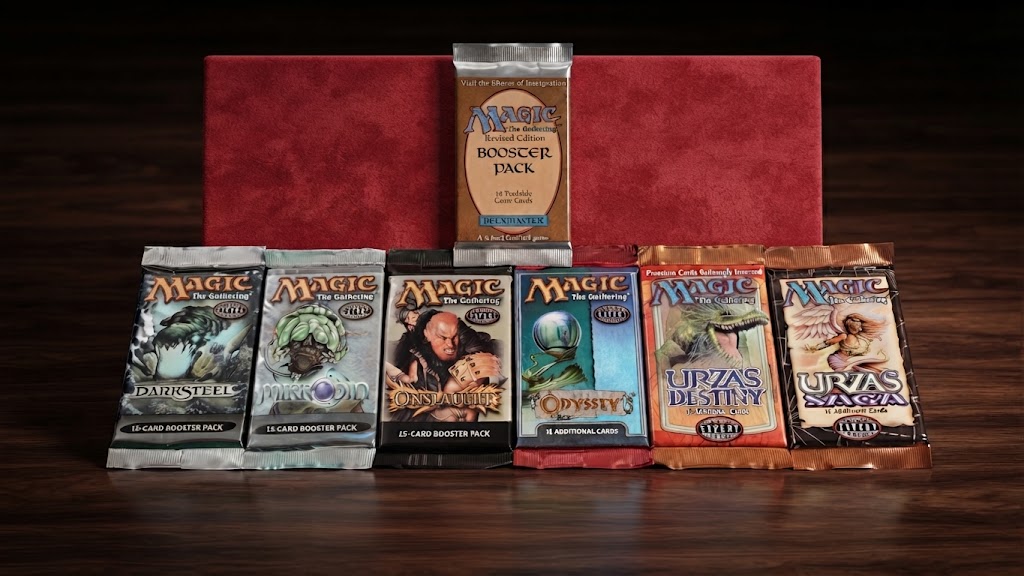
Ever dreamed of cracking an original 1993 Alpha booster pack to pull a pristine Black Lotus? Before you drop a small fortune on nostalgic cardboard, let’s look at the terrifying financial reality of opening vintage packs.
The Ultimate High-Roller Gamble: Nostalgia vs. Probability
For most Magic: The Gathering players, opening a modern pack is an expensive lottery. But opening a vintage booster pack, whether it’s Alpha, Beta, Unlimited, Antiquities, or Revised, is high-stakes institutional gambling.
We’ve all seen the videos: a streamer drops $30,000 on an unsearched sealed booster box, peels back the foil, and prays to the RNG gods for the holy grail of trading cards.
Is it ever actually worth it from a financial or collecting standpoint? Or is opening vintage packs the fastest way to set your life savings on fire? Let’s break down the math.
1. The Crown Jewels: What’s Actually Hiding in Vintage Packs?
If you are gambling on packs from the game’s earliest era (1993–1995), you are hunting specific, format-breaking anomalies that command jaw-dropping price tags on the secondary market.
-
The Power Nine (Alpha, Beta, Unlimited Booster Packs): Black Lotus, Ancestral Recall, Time Walk, and the five Moxen (Mox Pearl, Mox Sapphire, Mox Jet, Mox Ruby, Mox Emerald). These cards are so powerful they have been banned in virtually every format, yet their scarcity and collector prestige push their values into the tens (or hundreds) of thousands of dollars.
-
The Dual Lands (Unlimited, Revised Edition Starters & Booster Packs): Underground Sea, Tropical Island, Volcanic Island, and their siblings. Essential for Commander and Legacy format stability, raw copies from old Revised Starter Decks or boosters command massive baseline values.
-
Early Expansion Staples (Antiquities & Arabian Nights Boosters): If you crack an old Antiquities booster pack, you are hunting for Bazaar of Baghdad or Candelabra of Tawnos. In Arabian Nights, the ultimate target is Library of Alexandria.
2. The Brutal Math: Why Opening Them Is Financial Suicide
It sounds amazing on paper: buy an Unlimited Booster Pack for a few thousand dollars, pull a Black Lotus, and walk away a millionaire. But here is why the math fails 99% of the time:
-
The Weighted Odds: In older sets (especially Alpha and Beta), print runs were messy. The odds of pulling a rare power card from a random loose pack are microscopic-far lower than hitting a modern collector booster chase card.
-
Condition Degradation (The Centering & Edges Trap): Even if you miraculously pull a Black Lotus out of an old pack, card stock quality back in 1993 was notoriously inconsistent. Off-center cuts, minor whitening on the back edges, or surface scuffs can instantly drop a card’s grading value from a PSA 10 (worth a fortune) to a PSA 6 (cutting its market price by 70%).
-
The „Schrödinger’s Pack“ Paradox: Sealed vintage items, whether it’s a loose Revised Booster Pack or an intact Unlimited Starter Deck, are often worth more as sealed collector display pieces than the average value of the cards inside them. By cracking the seal, you are often statistically destroying equity before you even look at the cards.
How Smart Collectors Handle Vintage Era Assets
If your goal is to own pieces of Magic history or invest in cardboard that holds its value, cracking old packs is the worst possible strategy.
-
Buy Graded Singles Instead: Let someone else take the gamble, lose their money, and sell the verified, graded single card you actually want.
-
Audit the Expected Value (EV): Never trust the hype of a nostalgic unboxing video. Professional investors look at historical data and certified population reports, not luck.
-
Optimize Your Modern Budget: Save your bankroll for tools and upgrades that actually improve your deck’s win rate rather than chasing a 30-year-old ghost in a booster wrapper.
Tired of playing lottery with your wallet? Whether you’re upgrading a budget Commander deck or analyzing modern set values, stop guessing and start tracking real-time math using the PreconForge Calculator


