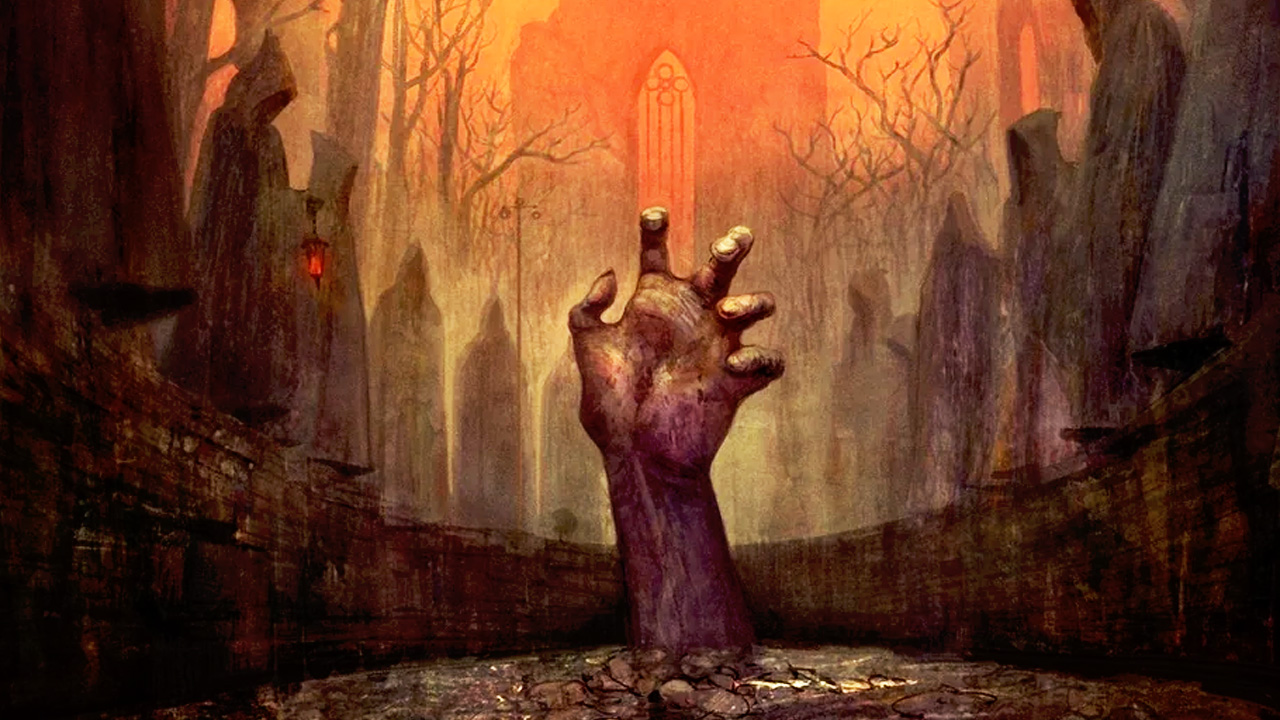
In many traditional card games, when a card is destroyed, discarded, or used up, it goes to a discard pile and stays there until the game ends. In Magic: The Gathering, things are much more complex. Cards that leave the main areas of play do not just sit in a useless pile. They enter specific game zones that have their own rules, triggers, and strategic value.
For a beginner, the biggest point of confusion usually lies between two specific zones: The Graveyard and The Exile Zone.
New players often assume that when a card is sent to either place, it is effectively gone forever. This assumption can ruin a match. In modern Magic, the Graveyard is frequently treated as a secondary hand, while Exile is a highly restrictive vault.
Understanding how these two zones function will help you choose the right removal spells and protect your resources. Here is the operational guide.
The Graveyard: The Second Hand
The Graveyard is your literal discard pile. Whenever an Instant or Sorcery resolves, whenever a creature dies from lethal damage, or whenever you discard a card from your hand, it lands face-up in your Graveyard.
Every player has their own individual Graveyard. The most important mechanical concept to learn about the Graveyard is this: Cards in the Graveyard are highly interactive.
Many decks are built specifically to treat the Graveyard as an extension of their hand.
-
Reanimation: Spells like Animate Dead can pull massive creatures directly out of the Graveyard and put them back onto the battlefield for a fraction of their normal mana cost.
-
Flashback and Escape: Keywords like Flashback (found on spells like Think Twice) allow you to cast spells directly out of your Graveyard.
-
The Threat: If your opponent has a massive dragon in their Graveyard, you cannot relax. As long as it sits in that zone, it remains a live mechanical threat that can return at any moment.
The Exile Zone: The Oblivion Vault
Historically referred to as being „removed from the game entirely,“ the Exile Zone is a shared area where cards are sent when a spell explicitly uses the word Exile.
Unlike the Graveyard, which is a bustling zone of recursion, the Exile Zone is designed to be a permanent containment cell.
-
The Security: When a card is exiled, it loses almost all connectivity to the game. You cannot reanimate an exiled creature, and you cannot cast a standard flashback spell from exile.
-
The Exception: Some specific spells utilize exile as a temporary holding zone (such as „blinking“ a creature out of existence with Ephemerate and returning it immediately, or exiling cards from the top of your library to cast them this turn using impulsive red draw). However, once a card is permanently exiled by a removal spell, it is effectively gone for good.
-
Face-Down Exile: Some cards exile objects face-down. If a card is in the exile zone face-down, no player is allowed to look at it or interact with its text box unless the specific card that put it there explicitly grants permission.
Destroy vs. Exile (Choosing Your Removal)
Now that you know how these zones work, you can understand why removal spells are valued differently based on their literal text wording.
Imagine your opponent controls a powerful creature that triggers an effect when it dies, or a creature that they can easily bring back from the graveyard.
-
Scenario A (Destroy): You cast Go for the Throat („Destroy target nonartifact creature“). The creature physically dies and goes to the Graveyard. It triggers all „dies“ abilities, and your opponent can reanimate it on their next turn.
-
Scenario B (Exile): You cast Swords to Plowshares („Exile target creature“). The creature bypasses the Graveyard entirely and goes straight into the Oblivion Vault. It never „dies“ (so no death triggers happen), and your opponent cannot bring it back.
This is why exile removal is considered the gold standard of interaction in Magic. It permanently answers a threat without leaving room for a counter-strategy.
Hidden Zone Audit Checklist
To quickly analyze card destination rules during a high-speed match, follow this operational checklist:
Wording: „Destroy“ or „Dies“
-
Destination: The Graveyard.
-
Status: Highly interactive. Triggers death abilities, completely vulnerable to reanimation strategies.
Wording: „Exile“
-
Destination: The Exile Zone.
-
Status: Locked down. Bypasses death triggers, completely cuts off standard graveyard recovery options.
Wording: „Discard“
-
Destination: The Graveyard (directly from the hand).
-
Status: Never touches the battlefield, but still triggers abilities that watch for cards entering the graveyard.
Final Verdict: Protect Your Graveyard, Respect the Exile
In Magic: The Gathering, context is everything. Treat your Graveyard as an investment pool, filled with resources that you can reuse later to outvalue your opponents. But when you are dealing with your opponent’s key pieces, never rely on basic destruction if you can avoid it. Seek out exile removal to ensure their threats are locked away in the vault permanently, giving you total control over the ultimate fate of the battlefield.


