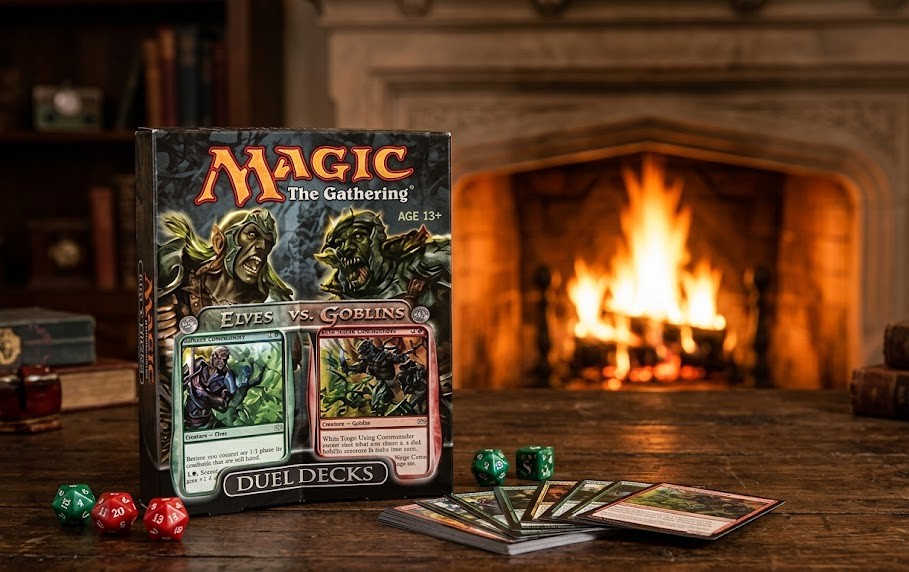
Released in 2007, Elves vs. Goblins was the very first product in the iconic Duel Decks series. It set the bar for what a thematic matchup should look like, pitting two of Magic’s most beloved creature types against each other in a frantic, race-to-the-finish battle.
This deck pairing is a masterclass in aggressive, tribal-synergy gameplay. In this PreconForge Guide, we’ll explore how these two forces collide and whether they hold up in the modern era of Magic.
The Decks: Mechanics and Archetypes
These decks are built to reward „going wide“—flooding the board with small creatures and overwhelming your opponent before they can set up a defense.
The Elf Deck (Green)
The Elf deck is a classic „ramp and swarm“ archetype. It focuses on using cheap mana-producing elves to accelerate into massive threats or a game-ending swarm.
-
Key Strategy: It starts slowly, generating mana, and then explodes. By the mid-game, you should be casting multiple spells per turn and utilizing lords to buff your entire board.
-
Notable Cards: Llanowar Elves, Elvish Champion, and the powerful Wellwisher to keep you in the game.
The Goblin Deck (Red)
The Goblin deck is pure, unfiltered aggression. It doesn’t care about mana efficiency or long-term value; it cares about dealing damage as fast as possible.
-
Key Strategy: The deck relies on burn, haste, and sacrifice outlets. It wants to hit hard and fast. If the game goes past turn 6 or 7, the Goblin player is likely in trouble, as their creatures are individually much weaker than the Elves.
-
Notable Cards: Goblin Matron, Goblin Warchief, and the chaotic Siege-Gang Commander.
Gameplay Dynamics: How They Clash
This matchup is essentially a „speed race.“ It’s an incredibly interactive and high-tension experience.
-
The Early Game: The Goblin player is almost always the aggressor. You will be dropping creatures turn 1 and turn 2, forcing the Elf player to block defensively or fall behind early.
-
The Mid Game: The Elf player needs to survive the initial goblin onslaught. Once the Elf player gets Elvish Champion or Timberwatch Elf onto the battlefield, the power dynamic shifts. Suddenly, the Elf creatures are much larger than the Goblins, forcing the Goblin player to rely on direct burn spells to remove key threats.
-
The Late Game: If the Elf player survives the early assault, they almost always win. Elves scale much better into the late game than Goblins do.
Verdict: Is it balanced?
Elves vs. Goblins is widely regarded as one of the best-balanced Duel Decks ever released.
-
Perfect Synergy: Both decks have clear, defined goals. The Goblins are the „ticking clock,“ and the Elves are the „wall that fights back.“
-
Interactive Gameplay: Because both decks play so many creatures, combat math is constant and engaging. There are very few „dud“ hands, as both decks are built for consistency.
-
Historical Significance: It feels like a genuine tribal war. The synergy cards (like Wirewood Hivemaster vs Goblin Sledder) provide great „aha!“ moments for players learning the mechanics of Magic.
PreconForge Final Score: 9/10
This set is the gold standard for Duel Decks. While the Goblins can sometimes feel a bit frustrated by the Elves‘ late-game scaling, the overall play experience is fantastic. If you want a fun, fair, and fast-paced game of Magic that feels like a classic fantasy battle, you can’t do better than this.


