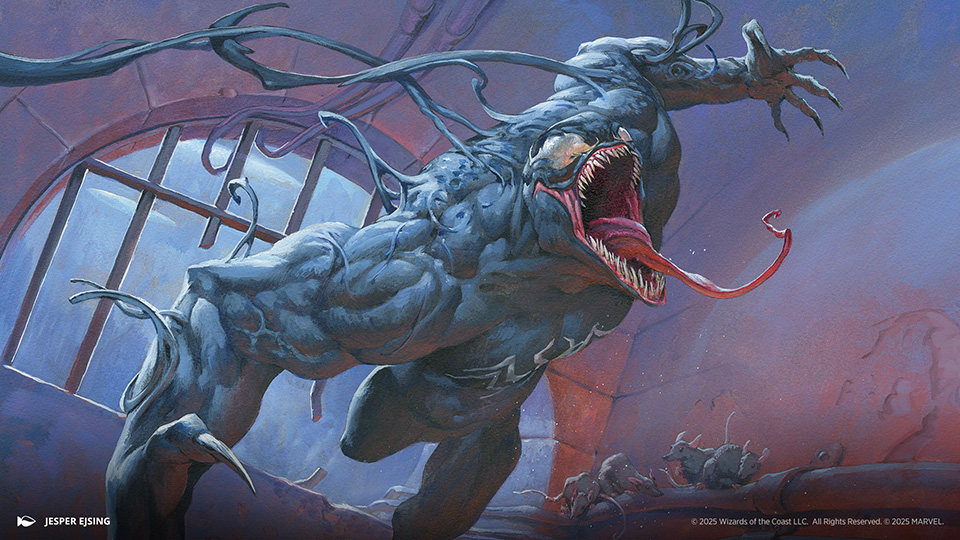
The global release of the MTG Marvel Super Heroes Secret Lair and Commander decks has officially sent shockwaves through the local game store ecosystem. While comic book enthusiasts and corporate executives are celebrating a massive financial milestone, a deep rift is opening within the Commander community.
Casual Commander pods, traditionally the safe haven for janky homebrews and slow kitchen-table Magic, are facing an existential identity crisis.
Between the aggressive pricing structure, the undeniable immersion clash, and an alarming shift in baseline power levels, many players are asking a hard question: Has Wizards of the Coast finally pushed the envelope too far, and are these Marvel decks actively ruining the spirit of casual EDH?
The Death of the „Slow Precon“ Era
Historically, buying a preconstructed Commander deck meant accepting certain limitations. Out-of-the-box precons used to be notorious for clunky mana bases, severe lack of instant-speed interaction, and a handful of high-mana filler cards that had to be cut immediately. They were designed to be slow, giving casual brewers a fair chance with their own unique builds.
The Marvel precons have permanently shattered that design philosophy. Decks like Avengers Assemble (Jeskai) and Doom Prevails (Grixis) are highly optimized, synergistic machines straight out of the cardboard packaging.
Mechanical Overload
The face commanders in this set provide an unprecedented level of card advantage and board presence. Doctor Doom, King of Latveria creates a highly resilient engine by pumping out oppressive „Villain“ tokens while offering built-in card selection. The decks are packed with efficient tutors, clean removal packages, and mana bases that rarely stumble.
When a fresh player sits down with an unmodified Marvel precon and consistently establishes a lethal board state by turn five or six, it completely invalidates the older, slower homebrews at the table. Casual players who enjoy building thematic, lower-powered decks are finding themselves completely priced out of the gameplay experience.
Flavor Fatigue and the Immersion Clash
Beyond the raw numbers and mechanics, there is a massive cultural debate taking place across local game stores. Magic: The Gathering built its legacy on high-fantasy worldbuilding, complex lore, and unique planes like Dominaria, Innistrad, or Ravnica.
Universes Beyond has been steadily chipping away at that identity, but the introduction of Marvel superheroes marks a massive turning point.
For a significant portion of the player base, watching Captain America, Iron Man, and Wolverine square off against classic dragons or elven warriors completely destroys the game’s immersion. The feeling of playing a strategic fantasy card game is being replaced by what many describe as a corporate billboard experience. When casual pods become saturated with pop-culture icons, the distinct flavor that made Magic unique begins to fade.
The Dangerous Precedent of the $75 Price Tag
Perhaps the most alarming aspect of the Marvel release is the aggressive financial strategy behind it. With a steep retail price tag hovering around $75 per deck, Wizards of the Coast is actively testing the limits of what casual players are willing to spend.
While the decks do contain strong mechanical synergy, the secondary market value of the reprints inside does not fully justify the steep price hike. Casual players are effectively paying a premium licensing tax directly to Disney and Marvel.
If this release proves to be wildly successful at this price point, it sets a highly dangerous precedent for future Universes Beyond products (such as the upcoming Final Fantasy set). The concept of an affordable entry point into the Commander format is rapidly disappearing.
The Strategic Precon Balance
To see how the new Marvel entries stack up against traditional casual expectations, here is the operational breakdown of the current meta:
-
Avengers Assemble (Jeskai Hero Synergies)
-
Power Output: Very High
-
Core Issue: Explosive turns driven by legendary synergies can easily overwhelm classic casual pods.
-
-
Doom Prevails (Grixis Artifact / Token Control)
-
Power Output: Very High
-
Core Issue: High interaction density and efficient tokens generated by Doctor Doom, King of Latveria suffocate lower-tier engines.
-
-
Endless Punishment (Rakdos Attrition / Group-Slug)
-
Power Output: High
-
Core Issue: Continuous life-drain from engines like Valgavoth, Harrower of Souls puts the entire table on an aggressive clock.
-
-
Traditional Casual Homebrew (Varies / Thematic)
-
Power Output: Low to Mid
-
Core Issue: Struggles to keep pace with modern precon acceleration, missing the explosive value of newer command zone designs.
-
Final Verdict: Growth vs. Identity
Are Marvel precons ruining casual Commander pods? The answer depends entirely on what you value most in the format.
If your definition of a healthy format is rapid player acquisition, high accessibility for newcomers, and highly polished, functional deck design, then the Marvel decks are an undeniable triumph. They offer fantastic gameplay right out of the box and bridge the gap between pop culture and tabletop gaming perfectly.
However, if you believe the soul of Commander lies in unique fantasy worldbuilding, slow-paced kitchen-table politics, and creative deckbuilding that isn’t dictated by corporate crossover synergy, then these decks represent a serious threat to the format’s long-term health.
The Marvel invasion is here to stay, and casual pods will need to have serious rule-zero conversations to ensure that power levels and flavor preferences remain balanced at the table.


