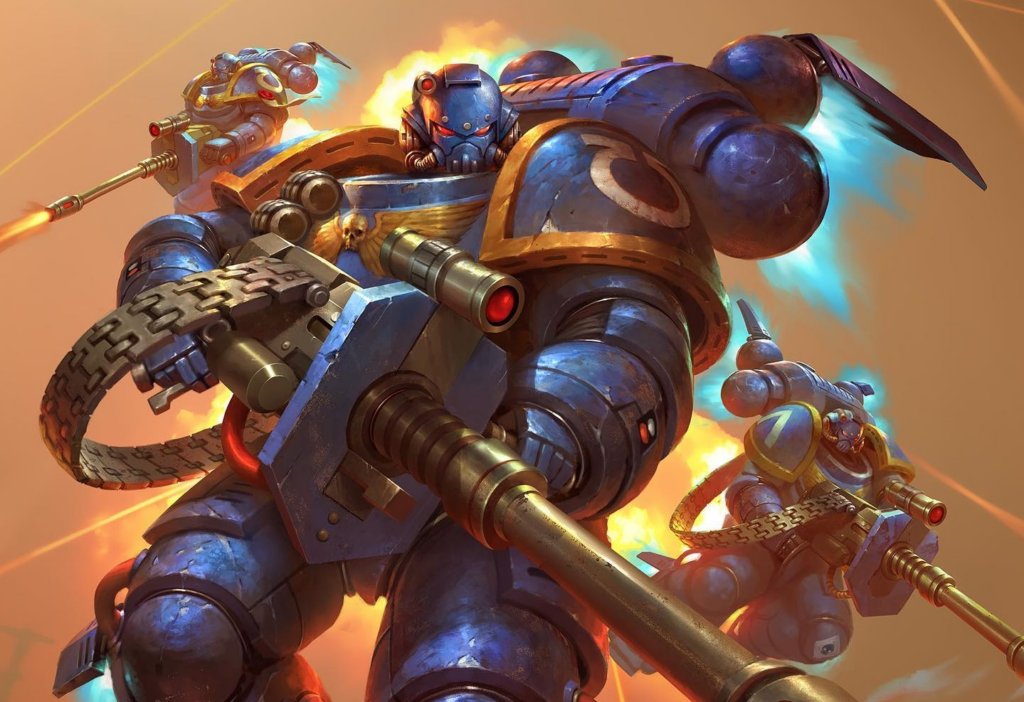
Forces of the Imperium arrives with Inquisitor Greyfax as its face commander, but Marneus Calgar gives the deck a much stronger reason to focus on the token theme already running through the precon.
Marneus costs , has double strike and draws a card whenever one or more tokens enter under your control. He can also pay to create two 2/2 white Astartes Warrior tokens with vigilance. The important wording is “one or more”: creating five tokens simultaneously still draws only one card, while creating tokens at several different moments can trigger Marneus repeatedly.
That makes the best Forces of the Imperium upgrade surprisingly straightforward. We want cheap or repeatable token production, effects that create tokens during opponents‘ turns and enough mana to keep Marneus on the battlefield while the engine runs.
The Stock Deck Already Has a Strong Token Core
Forces of the Imperium contains several cards that become much better with Marneus in the command zone. Company Commander creates two Soldier tokens when it enters, Space Marine Devastator can generate additional bodies through squad, and Vanguard Suppressor gives the deck another way to build a wider battlefield.
Birth of the Imperium, Deploy to the Front and Martial Coup provide larger token bursts, while Reconnaissance Mission rewards those creatures once they start connecting in combat. The precon also has excellent interaction in Swords to Plowshares, Mortify, Utter End and several sweepers.
The biggest weakness is that the original list is spread across several ideas. Greyfax wants creatures attacking and tapping, other cards care about specific creature types, while Marneus simply wants a steady stream of tokens. Concentrating on that last plan makes the deck considerably more consistent.
Best Forces of the Imperium Upgrades
Nadir Kraken is one of the most natural Marneus cards available. Whenever you draw, you can pay to put a +1/+1 counter on the Kraken and create a Tentacle token. That token then triggers Marneus and draws another card, giving you another opportunity to use the Kraken. Even without a combo, a little spare mana rapidly becomes creatures and cards.
Faerie Artisans is especially powerful in Commander because opponents provide the trigger for you. Whenever a nontoken creature enters under an opponent’s control, you create a temporary token copy. Each new copy can trigger Marneus during an opponent’s turn, exactly the kind of incremental token production we want.
Black Market Connections gives you several resources from a single enchantment. During your precombat main phase it can create a Treasure, produce a Changeling creature token and draw a card. The tokens provide Marneus triggers while the Treasure helps pay his relatively demanding five-mana casting cost.
Anointed Procession does not generate Marneus triggers by itself, but it doubles the tokens your other effects create. Marneus will still draw only once if those doubled tokens enter simultaneously, but the extra bodies dramatically improve your combat plan and sacrifice synergies.
Finally, Ashnod’s Altar gives the army another purpose once attacking is no longer enough. Turning creature tokens into mana allows you to fuel Marneus’s expensive Chapter Master ability, cast interaction or support engines such as Nadir Kraken.
What Should You Cut?
Inquisitor Greyfax is a strong commander for her own strategy, but in the 99 she costs four mana without producing a token or directly improving Marneus’s draw engine. She is the cleanest first cut once we commit to the alternate commander.
Arco-Flagellant is another reasonable creature that simply does not contribute enough to the token plan. Cybernetica Datasmith supports Robot tokens, but its narrow focus is less appealing than a repeatable token engine that works with the entire deck.
The top end also contains cards such as Knight Paladin that are entertaining but expensive relative to the value they provide. Marneus already costs five mana, so reducing the number of slow plays makes it easier to deploy him and immediately begin generating cards.
A clean first round of changes would be:
Out: Inquisitor Greyfax, Arco-Flagellant, Cybernetica Datasmith, Knight Paladin, Temple of the False God
In: Nadir Kraken, Faerie Artisans, Black Market Connections, Anointed Procession, Ashnod’s Altar
The result keeps the Warhammer token identity while removing several cards that belong more naturally in the Greyfax version of the deck.
One Token at a Time Can Be Better Than Ten at Once
Marneus’s wording changes how we evaluate token generators. If Deploy to the Front creates ten Soldier tokens simultaneously, Master Tactician sees one event and draws one card.
That does not make mass-token spells bad. Ten creatures are still ten creatures. But from a card-advantage perspective, an effect that creates one token on your turn and then another during an opponent’s turn can be much more valuable.
This is why Faerie Artisans, Black Market Connections and other repeatable engines deserve priority. They give Marneus opportunities to trigger across the entire turn cycle rather than loading all token production into one moment.
Treasure, Clue and other noncreature tokens count too. Marneus simply says tokens, not creature tokens. That makes Esper’s huge selection of artifact-token generators particularly attractive.
Marneus Can Turn Tokens Into a Real Draw Engine
The commander’s own Chapter Master ability is expensive at , so it should be treated as a mana sink rather than the primary way to trigger him. Paying six mana creates two Astartes Warriors simultaneously and draws one card through Master Tactician.
The stronger engine is usually to let cheaper cards create tokens while Marneus supplies the draw. Once your hand stays full, the deck naturally has enough creatures and interaction to play a longer control game.
Ashnod’s Altar is particularly useful because disposable creatures become two colorless mana each. A board of tokens can therefore be converted into resources after combat or in response to removal, giving the deck another way to recover value from an army that would otherwise disappear to a sweeper.
That balance is important. We are still a token deck, but we do not need every token to survive forever. Sometimes its most useful job is simply to enter, draw a card through Marneus and later become mana.
Token Doublers Multiply the Army, Not the Cards
It is easy to misunderstand how Anointed Procession interacts with Marneus.
If an effect would create two tokens and Procession makes four instead, all four still enter together. Marneus therefore triggers once, not four times.
That means token doublers should not be viewed as card-draw multipliers. Their job is to make the battlefield more dangerous. Four Astartes instead of two represent twice the combat pressure and twice the potential sacrifice material even though Marneus draws the same single card.
This is why I would prioritize repeatable token generators first and token doublers second. Get the card engine running, then make each individual token event produce a larger army.
The Mana Base Needs Reliable Esper Colors
Marneus costs , making color fixing important. The stock deck already includes Command Tower, Exotic Orchard and a useful collection of Esper lands and mana rocks, so there is no need for an immediate expensive rebuild.
I would instead improve the slowest lands gradually and remove Temple of the False God early. Marneus wants to reach five mana reliably, and a land that cannot produce mana in the opening turns makes that job harder rather than easier.
Two-mana rocks are particularly valuable because they can move Marneus forward by an entire turn. The goal is simple: establish mana early, cast the commander and still have enough resources left to produce tokens before opponents can remove him.
How the Upgraded Forces of the Imperium Deck Wins
The upgraded deck starts by developing mana and cheap token engines before deploying Marneus Calgar. Once he survives, every separate token event begins replacing itself with another card.
That card advantage allows the deck to continue producing soldiers while keeping interaction available. Anointed Procession makes each token event build a larger battlefield, while Ashnod’s Altar converts creatures into mana when combat is no longer the best use for them.
Most games still end through the army itself. Vigilant Astartes, Soldiers and other tokens gradually overwhelm opponents while Marneus ensures that committing creatures to the battlefield does not empty your hand.
The difference from the stock list is consistency. Instead of several loosely connected Imperial subthemes, almost every important card now contributes to the same loop:
Create a token. Draw a card. Create another token later. Repeat.
PreconForge Verdict
Marneus Calgar gives Forces of the Imperium a cleaner identity than the original precon. The stock list already contains plenty of token production, interaction and board wipes, so the upgrade does not require replacing half the deck.
The most important improvement is changing how the deck creates tokens. One enormous burst still builds an army, but several smaller token events generate much more card advantage through Marneus.
Nadir Kraken, Faerie Artisans and Black Market Connections strengthen that repeatable engine, while Anointed Procession makes every deployment larger and Ashnod’s Altar ensures even expendable soldiers remain useful.
That is all Marneus really asks of the deck: keep deploying resources at different moments, and the Chapter Master will make sure your hand never runs dry.


